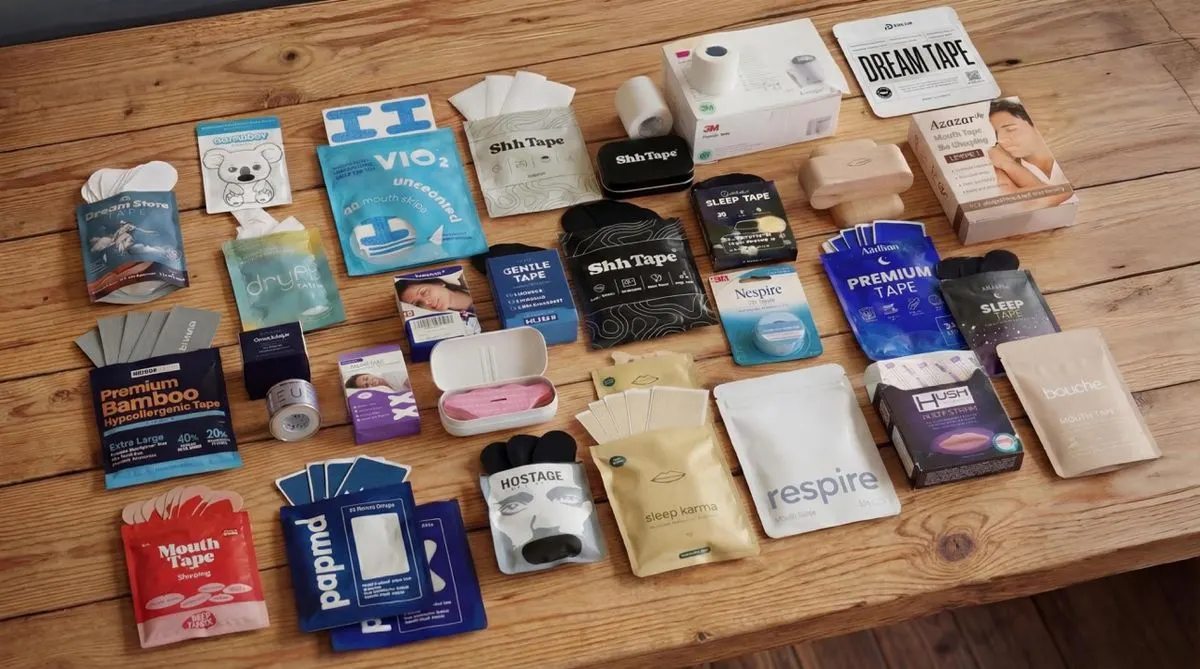
We Ran a 15-Week Mouth Tape Study. Here’s What the Data Shows.
29 participants. 81 nightly sleep logs. Real sleep tracker data. An alternating tape/no-tape protocol designed to measure what mouth taping actually does to your sleep.

Mouth Taping Improved Every Sleep Metric We Tracked
Across 81 valid nightly logs from 29 participants, nights with mouth tape showed higher sleep quality, more energy, and dramatically less dry mouth. Sleep-tracker scores also favored tape nights, though by a much smaller margin. The pattern held across regular sleepers and CPAP users alike.
The Headline Numbers
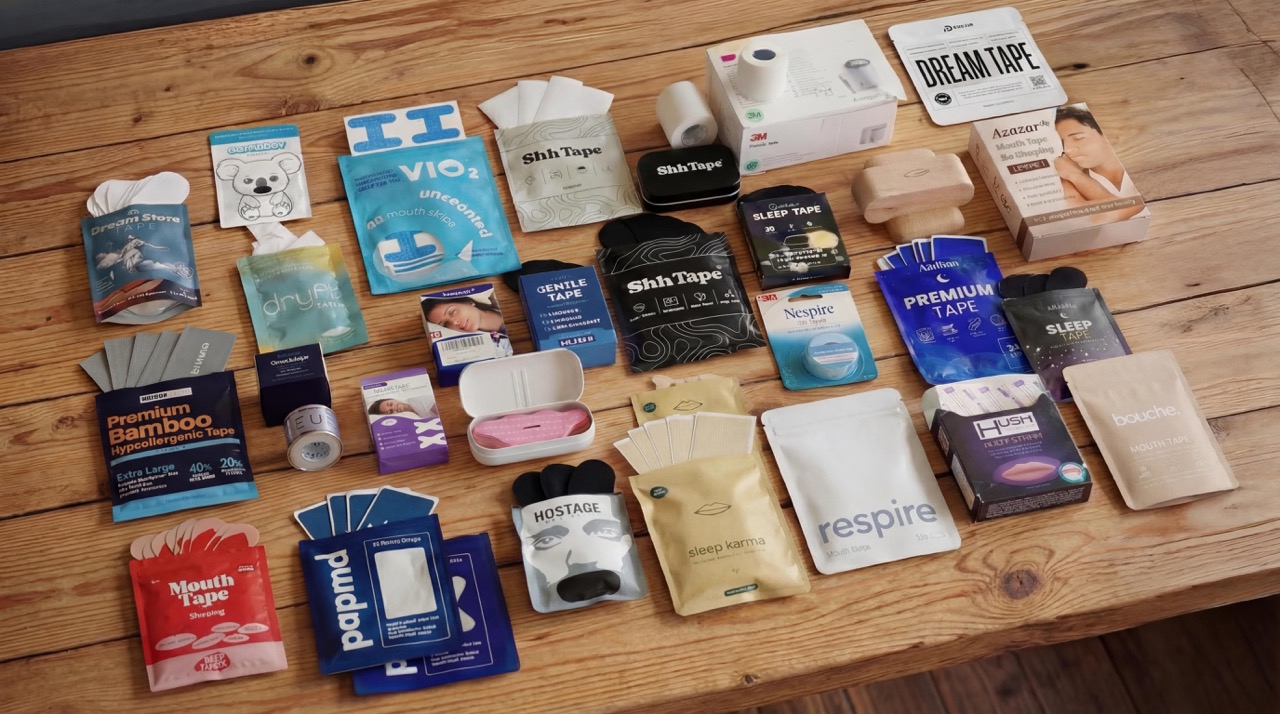
Before diving into the details, here are the top-line results from 81 valid nightly sleep logs across 29 participants. Every metric moved in the same direction: tape nights were better.
Each participant alternated between tape and no-tape nights, so every person is their own control. This makes the consistent direction of results more meaningful than the sample size alone would suggest.
How We Ran the Study
We recruited participants through the Evident Reviews sleep study enrollment page; 29 contributed valid nightly data. Each received a supply of Sleep Karma bamboo silk mouth tape and instructions for a 4-night alternating protocol: tape on Night 1, tape off Night 2, tape on Night 3, tape off Night 4.
Every morning, participants logged their sleep data through a structured form: sleep quality (1–10), energy level (1–10), whether they experienced dry mouth, whether the tape stayed on, their sleep tracker score (if available), and any notes about the night.
After completing their 4 nights, participants filled out an exit survey rating their overall experience, comfort, skin irritation, likelihood to continue, and likelihood to recommend. We collected consent for data use and quotation separately.
For analysis, we counted only valid nights. We excluded logs where the tape did not stay on (a night the tape came off can’t measure what tape does), an entry from a participant whose kit hadn’t yet arrived, and duplicate submissions. That left 81 valid nightly logs from 29 participants, plus 12 completed exit surveys. These exclusions are defined by data validity, independent of the results.
The 4-Night Protocol
Night 1: Sleep with mouth tape — log sleep quality, energy, dry mouth, tracker score
Night 2: Sleep without tape — log the same metrics
Night 3: Sleep with mouth tape — log again
Night 4: Sleep without tape — final comparison log
Exit survey: Rate overall experience, comfort, skin irritation, willingness to continue
This within-subject design means each person serves as their own control. Instead of comparing different people, we’re comparing the same person’s sleep with and without tape — a stronger signal than between-group comparisons at this sample size.
Results by Metric
Sleep Quality: +25% Higher on Tape Nights
Participants rated their sleep quality on a 1–10 scale every morning. The difference was clear and consistent across most participants.
Tape nights averaged 7.1 out of 10. No-tape nights averaged 5.7. That’s a 1.4-point gap — the difference between “I slept okay” and “I slept well.”
Of the 20 participants who logged both a tape and a no-tape night, 16 slept better on tape. The four who didn’t often cited external factors — a cold, congestion, or an otherwise disrupted night.
- Average sleep quality: 7.1/10
- 16 of 20 participants who logged both conditions improved on tape
- Multiple participants reported sleeping through the night
- Common notes: “more peaceful,” “didn’t wake up”
- Average sleep quality: 5.7/10
- Frequent waking reported
- Dry mouth reported on 59% of no-tape nights
- Common notes: “restless,” “woke up multiple times”
Sleep Tracker Scores: A Smaller, +3.8-Point Edge
Most participants tracked their sleep with wearables (Apple Watch, Oura Ring) or CPAP machines. We asked them to upload a screenshot of their sleep score each morning.
Tape nights averaged 81.7. No-tape nights averaged 77.9 — a 3.8-point gap. This is the one place the data is more modest: the trackers showed only a small edge for tape nights, far smaller than the difference participants reported in how their sleep actually felt. We’d caution against reading too much into the wearable scores on their own.
One caveat drives this home: one participant scored 100 on a no-tape night but reported terrible subjective sleep (“I have no idea why the score was so high. I didn’t feel like I slept well at all.”). This highlights the gap between what trackers measure and how sleep actually feels — and suggests mouth taping’s biggest benefit may be in perceived quality rather than what a sensor picks up.
Morning Energy: +1.2 Points on Tape Nights
Participants rated their morning energy on the same 1–10 scale. Tape nights averaged 6.7. No-tape nights averaged 5.5.
The energy gap was smaller than the sleep quality gap, which makes sense — energy depends on factors beyond sleep quality (caffeine, exercise, stress, wake time). But the direction was consistent: better sleep quality on tape nights translated to modestly higher morning energy.
Dry Mouth: 59% → 12% on Tape Nights
This was the clearest, most dramatic finding in the entire study.
On no-tape nights, 59% of logs reported waking up with dry mouth. On tape nights, just 12% did. That’s an 80% relative reduction — the largest and most consistent effect we measured.
Dry mouth isn’t just uncomfortable — it’s a downstream marker of mouth breathing during sleep. Mouth breathing dries out your oral mucosa, which increases bacterial growth, contributes to bad breath, and is associated with higher rates of cavities and gum disease.
Want to try mouth taping?
We tested 25 brands for safety, comfort, and hold strength. See which ones actually work.
Read the Full Review →Comfort & Adhesion: 8.5/10 Average
In exit surveys, participants rated their comfort with the tape at 8.5 out of 10 on average, with a range of 6 to 10.
Skin irritation was minimal: 8 of 11 respondents reported zero irritation. Three reported mild irritation. No one reported moderate or severe irritation.
Tape adhesion was strong but not perfect. Most tape-night entries reported the tape stayed on all night. A few participants noted partial detachment — one mentioned the “bottom half came off completely” on one night despite being secure at bedtime. This is consistent with our lab testing: Sleep Karma’s bamboo silk tape has strong initial tack but can loosen with significant jaw movement or moisture. (Nights where the tape came off were excluded from the tape-night averages above.)
- 8.5/10 average comfort rating
- 8 of 11 reported zero skin irritation
- Tape stayed on fully for most participants most nights
- “Ease of use” called out as a highlight
- Occasional partial detachment overnight
- One participant needed to clear throat and found tape restrictive
- CPAP users need specific orientation guidance (vertical, not horizontal)
CPAP Users: Promising but Nuanced
Several participants in the study use CPAP machines for sleep apnea — we profile three whose logs were the most detailed. This is a particularly interesting subgroup because CPAP seal quality depends on keeping your mouth closed — exactly what mouth tape is designed to do.
The results were promising but mixed:
Participant A
Saw the most dramatic improvement. On tape nights: “Much better sleep! Far fewer apnea events per hour. No mask seal problems. No waking.” Scored 95 and 98 on tape nights vs. 86 and 100 on no-tape nights (but the 100-score night felt terrible subjectively). The apnea event reduction was the clearest clinical signal in the entire study.
Participant B
Discovered that tape orientation matters. Applying tape horizontally caused more mask leaks. After switching to vertical application: “This has been one of the smartest decisions I have made to improve my sleep.”
Participant C
Mixed results. Some nights the tape helped maintain seal, other nights it came partially off. CPAP reported a bad seal on one tape night, suggesting mouth was opening despite tape. Noted: “I don’t remember waking up though” — so even partial taping may have reduced conscious arousals.
The takeaway for CPAP users: mouth tape can meaningfully reduce air leak and apnea events, but application technique matters. Vertical placement (covering the center of the lips) works better than horizontal with most mask styles. We’re planning a dedicated CPAP + mouth tape guide based on these findings.
What Participants Said
These quotes are from participants who explicitly consented to being quoted. Names are abbreviated for privacy.
“The overall length and quality of my sleep improved significantly.”
“Sleep quality, didn’t wake multiple times during night with dry mouth, no loud snoring as noted by partner.”
“I slept more peacefully on the nights I used the mouth tape.”
Would Continue Using
Would Recommend
Join the next study
We’re expanding our sleep study with a larger cohort and longer duration. Sign up to be notified when enrollment opens.
Sign Up for the Next Study →Limitations & What We’d Do Differently
We’re transparent about what this study does and doesn’t prove. This was an early-stage observational study, not a clinical trial. Here’s what you should keep in mind when interpreting these results:
- 1Small sample size (n=29). The consistent direction of results is encouraging, but 29 people isn’t enough to draw population-level conclusions. Effects could be larger or smaller in a bigger cohort.
- 2Self-reported data. Sleep quality, energy, and dry mouth were all self-reported on subjective scales. There’s inherent variability in how different people use a 1–10 scale.
- 3We filtered the data. We excluded nights where the tape didn’t stay on, one participant who hadn’t received the kit, and duplicate submissions. These exclusions are based on validity and defined independently of the outcome — but any filtering involves judgment, and the unfiltered data shows the same direction with somewhat smaller gaps.
- 4No placebo control. Participants knew when they were using tape. Expectation bias could inflate the tape-night scores. A blinded study would need a sham tape — something we’re exploring for the next round.
- 5Short duration. Four nights per person captures acute effects but not long-term adaptation. Some participants noted their tape nights improved as they got more comfortable with the product.
- 6Single product tested. All participants used Sleep Karma tape. Results may differ with other brands, especially those with different adhesive types or coverage patterns.
- 7Completion rate. 33 people submitted nightly logs (29 after filtering for validity), but only 12 completed exit surveys. We don’t know whether non-completers had different experiences.
Despite these limitations, the within-subject design (each person compared to themselves) and the consistency of results across the large majority of participants give us confidence that the effect is real. The dry mouth finding in particular — 59% to 12% — is hard to attribute to placebo.
What’s Next
This pilot study gives us a foundation to build on. Here’s what we’re planning:
Larger cohort: 50–100 participants with more diverse sleep profiles
Longer duration: 2–4 weeks per participant to capture adaptation effects
Objective measurement: Partnering with wearable companies for direct data integration (not screenshots)
CPAP-specific arm: Dedicated protocol for CPAP users with AHI event tracking
Multi-brand comparison: Head-to-head tape testing within the study framework
If you’re interested in participating in our next study, sign up through the link below. We’ll notify you when enrollment opens.
Frequently Asked Questions
Participants followed a 4-night alternating protocol: tape on Night 1, off Night 2, on Night 3, off Night 4. Each morning they logged sleep quality (1–10), energy (1–10), dry mouth (yes/no), tape adhesion, sleep tracker score, and notes. After completing all 4 nights, they filled out an exit survey.
29 participants contributed valid data through the Evident Reviews sleep study page. The group included regular sleepers and several CPAP users. Participants ranged in age and sleep habits. All received Sleep Karma bamboo silk mouth tape for the study.
No. This is an observational pilot study with self-reported data. It was not randomized, blinded, or IRB-approved. The results are directional — they show consistent patterns but shouldn’t be treated as clinical evidence. We’re using these findings to design a more rigorous follow-up study.
Sleep Karma is our top-ranked mouth tape based on independent testing of 25 brands. Using a single tape ensured consistency across participants. Future studies will include multi-brand comparison arms.
Yes. Visit our sleep study enrollment page to sign up. We’ll notify you when the next cohort opens. The next study will be larger (50–100 participants), longer (2–4 weeks), and include objective wearable data integration.
Participants received free Sleep Karma mouth tape for the study. No other compensation was provided. Participation was voluntary and consent for data use was collected separately.
References
- Evident Reviews Sleep Study. Internal data collected Feb–Jun 2026 via Formspree (n=29 participants, 81 valid nightly logs, 12 exit surveys). Protocol: 4-night alternating tape/no-tape within-subject design. Analysis excluded nights where the tape did not stay on, entries from a participant who had not yet received the kit, and duplicate submissions.
- Lee YC, Lu CT, Cheng WN, Li HY. The Impact of Mouth-Taping in Mouth-Breathers with Mild Obstructive Sleep Apnea: A Preliminary Study. Healthcare. 2022;10(9):1755.
- Huang TW, Young TH. Novel porous oral patches for patients with mild obstructive sleep apnea and target validation with computational simulation. Sleep and Breathing. 2015;19(4):1245–1252.