💡Key findings
- Both Oral-B picks carry the ADA Seal. No Sonicare brush currently does. ADA's product pages list Oral-B iO Series and Oral-B Oscillating-Rotating-Pulsating rechargeables (the second covers the Pro series). The DiamondClean 9000 is not on ADA's Seal list (checked Oct 16, 2026), and WSJ reported in 2026 that Philips' 4100 lost its listing. This is about the seal process, not proof that Sonicare cleans worse.
- Oscillating vs sonic is close to a tie. A 2021 JADA systematic review (El-Chami et al., 24 trials, 2,998 patients) found little to no difference in plaque or gum scores at 4 weeks. The 2010 Cochrane review saw a small, short-term plaque edge for oscillating-rotating.
- Electric beats manual, modestly. Cochrane 2014: 11% less plaque and 6% less gingivitis at 1–3 months; 21% and 11% after three months (Yaacob et al.).
- The $50 pick does the clinically important parts. The Pro 1000 has a 2-minute timer, 30-second pacer and pressure cut-off, and is ADA-accepted. Its pressure warning is easy to miss (no light), and its battery is NiMH, about 10 days (Electric Teeth).
- Heads drive long-term cost. At brand list prices (Oct 16, 2026), iO heads cost about $7.50–15 each, Sonicare C3 heads about $12.25, and Oral-B CrossAction heads about $6.50–11.70.
Any decent electric toothbrush beats a manual one for plaque, but the gap is smaller than marketing suggests. Cochrane's 2014 review found 11% less plaque at 1–3 months, rising to 21% after three months. For oscillating-rotating (Oral-B) vs sonic (Sonicare), the best independent review found little to no difference at four weeks. So we focused on what does differ: whether the ADA has independently accepted the brush, how clearly it warns you when you press too hard, how long the battery really lasts, and what the heads cost over a year. Prices and seals were checked Oct 16, 2026.
Those plaque figures are from Yaacob et al. 2014 (Cochrane CD002281.pub3, 56 trials, 5,068 participants). The full result is 11% less plaque and 6% less gingivitis at 1–3 months, and 21% less plaque and 11% less gingivitis after more than 3 months. The review says the clinical importance of these reductions is unclear. The four-week oscillating-versus-sonic result in the paragraph above is El-Chami et al. 2021, not the 2014 review.
What an 11-year study actually found
An 11-year observational study of the SHIP cohort (Pitchika et al. 2019, Journal of Clinical Periodontology, n=2,819) found less probing-depth and attachment-loss progression among people who used an electric toothbrush, 17.7% less DMFS (decayed, missing, or filled surfaces) progression, and 19.5% more teeth retained. One author disclosed Procter & Gamble grant funding. The paper does not report a gum-recession percentage, and it does not report that users retained 1.4 more teeth.
How the three brushes compare
| Feature | Oral-B iO Series 9 | Philips Sonicare DiamondClean 9000 | Oral-B Pro 1000 |
|---|---|---|---|
| Role | Best overall | Best sonic | Best budget |
| Technology | Oscillating-rotating + micro-vibrations | Sonic, up to 62,000 brush movements/min | Oscillating-rotating-pulsating (3D) |
| Brand price (Oct 16, 2026) | $249.99 sale / $329.99 list (oralb.com) | No price shown on usa.philips.com; Amazon $189 (HX9911/91, via search, Oct 16) | $49.99 (Pro 1000 Gum Care, oralb.com) |
| Modes | 7 (Daily Clean, Whiten, Gum Care, Sensitive, Super Sensitive, Intense Clean, Tongue Clean) | 4 modes × 3 intensities (Clean, White+, Gum Health, Deep Clean+) | 3 (Daily Clean, Whitening, Sensitive) |
| Pressure feedback | Smart Pressure Sensor: too hard / too soft / right, with color light | Handle vibrates to alert | Pulsations stop; no light |
| Timer | 2-min timer on color display | SmarTimer + BrushPacer | 2-min timer, 30-s pulses |
| Battery (brand) | About 2 weeks; about 3-h magnetic charge (Oral-B) | Up to 14 days, Li-ion (Philips) | About 10 days, NiMH; up to 12-h charge (Electric Teeth test) |
| App | Yes (3D teeth tracking) | Yes (Sonicare app) | No |
| ADA Seal (ada.org, Oct 16, 2026) | Yes ("Oral-B iO Series") | Not listed | Yes (Oral-B O/R/P rechargeables) |
| Brand head price | iO Ultimate Clean: $29.99/2, $44.99/6, $64.99/9 → $7.22–15.00 each | C3 4-pack HX9044/95: $48.99 → $12.25 each | CrossAction: $34.99/3, $64.99/10 → $6.50–11.66 each |
| Head cost/yr (4 heads, cheapest brand pack) | ≈ $29–30 | ≈ $49 | ≈ $26 |
| Aggregated rating (source, date) | 4.7/5, 584 reviews (Best Buy); 4.4/5, 436 (Target): via search, Oct 16 | 4.2/5, 659 reviews (usa.philips.com HX9911/76 schema, Oct 16) | 4.5/5, about 68,000 reviews (Amazon, white listing): via search, Oct 16 |
Ratings are retailer or brand aggregates and change daily. They are not Evident scores. Head cost assumes replacement every 3 months (ADA guidance).
Oscillating-rotating vs sonic: what the evidence says
- Cochrane, Deacon et al. 2010 (CD004971). Rotation-oscillation removed slightly more plaque than side-to-side brushes over ≤3 months (SMD 0.24; 95% CI 0.02–0.46). The gingivitis difference was uncertain (SMD 0.35; −0.04 to 0.74). Read the review. This is a different review from the 2014 powered-versus-manual comparison.
- El-Chami et al. 2021, JADA. Systematic review of 24 RCTs and 2,998 patients: moderate-certainty evidence of little to no difference in plaque index (SMD 0.02) or gingival index (SMD 0.13) at 4 weeks. The authors' words: "The evidence does not suggest the superiority of either." PubMed.
- Grender et al. 2020, American Journal of Dentistry. Meta-analysis of 16 RCTs and 2,145 subjects: oscillating-rotating brushes reduced bleeding sites more than sonic. It pooled one manufacturer's (P&G/Oral-B) trials. PubMed.
Pick by feel and features. If you like a small round head working tooth by tooth, go Oral-B. If you prefer a larger, gentler head, go Sonicare.
How we chose
We shortlisted brushes on five checks: (1) independent clinical backing, meaning ADA Seal status and peer-reviewed reviews of the brush technology; (2) pressure feedback; (3) a 2-minute timer with a 30-second pacer; (4) battery life as stated by the brand and, where available, measured by independent testers; and (5) total cost, meaning the brush plus four brand heads a year. We read brand spec sheets and clinical claims, checked ADA.org, and logged retailer review averages with their dates. We don't accept affiliate commissions on this page. Firsthand testing is shown as "not tested" until our hands-on notes are published.
Material Safety
25%What is actually in the product — ingredients, published testing, contaminants, and label accuracy. Weighted heaviest because these products go on or in your body.
Trust & Reputation
20%Lab results, review patterns, BBB record, and regulatory history. We score what a brand can prove, not what it claims.
Value & Policy
15%Cost per use vs. quality, return terms, and subscription practices. Premium pricing is not penalized when the formulation and testing justify it.
Features
15%Category-specific features: dose form, device specs, or mouth-tape fit, vents, and origin. Same weight everywhere.
Firsthand Testing
Not testedNo hands-on notes are published for these brushes. Until they are, firsthand testing on this page is not tested.
Read the full methodology — scoring weights, testing steps, and how we handle products from brands we own.
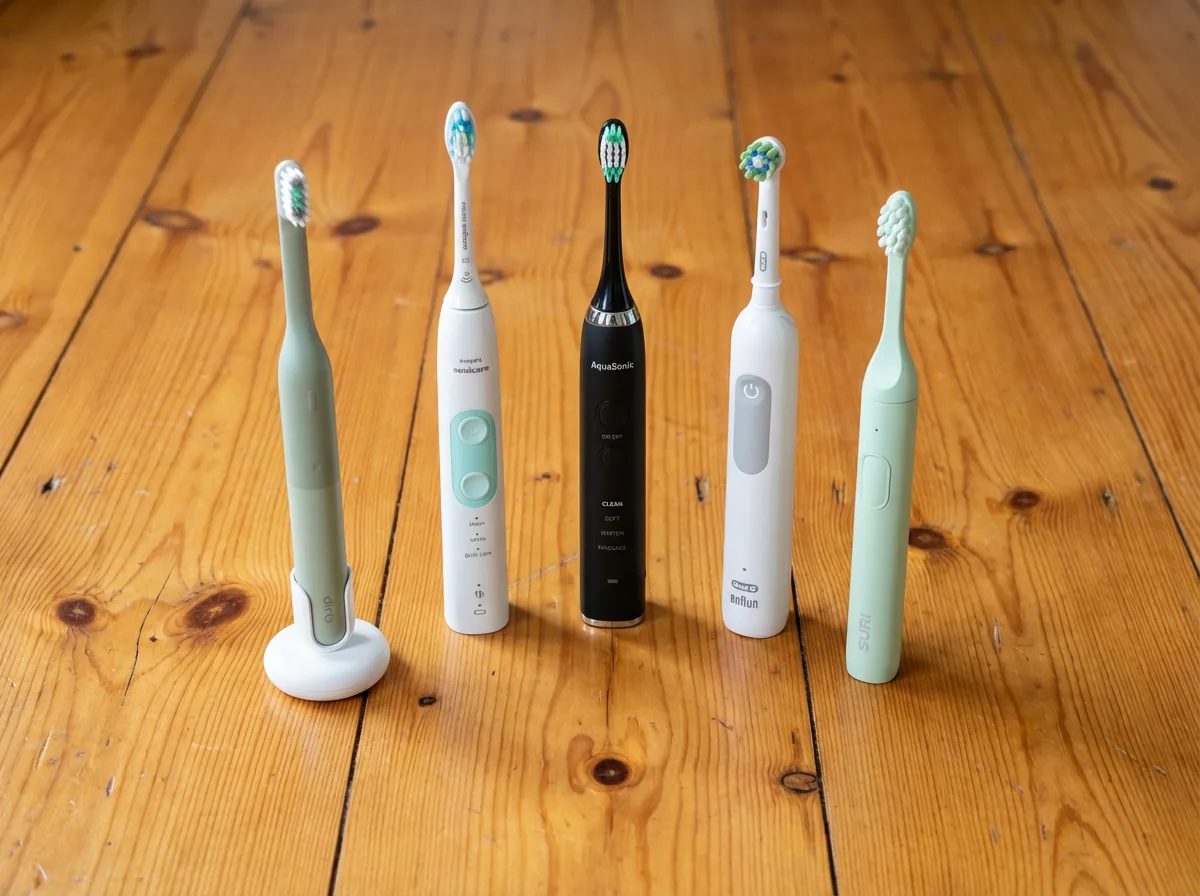
Oral-B iO Series 9: Best overall
What it is
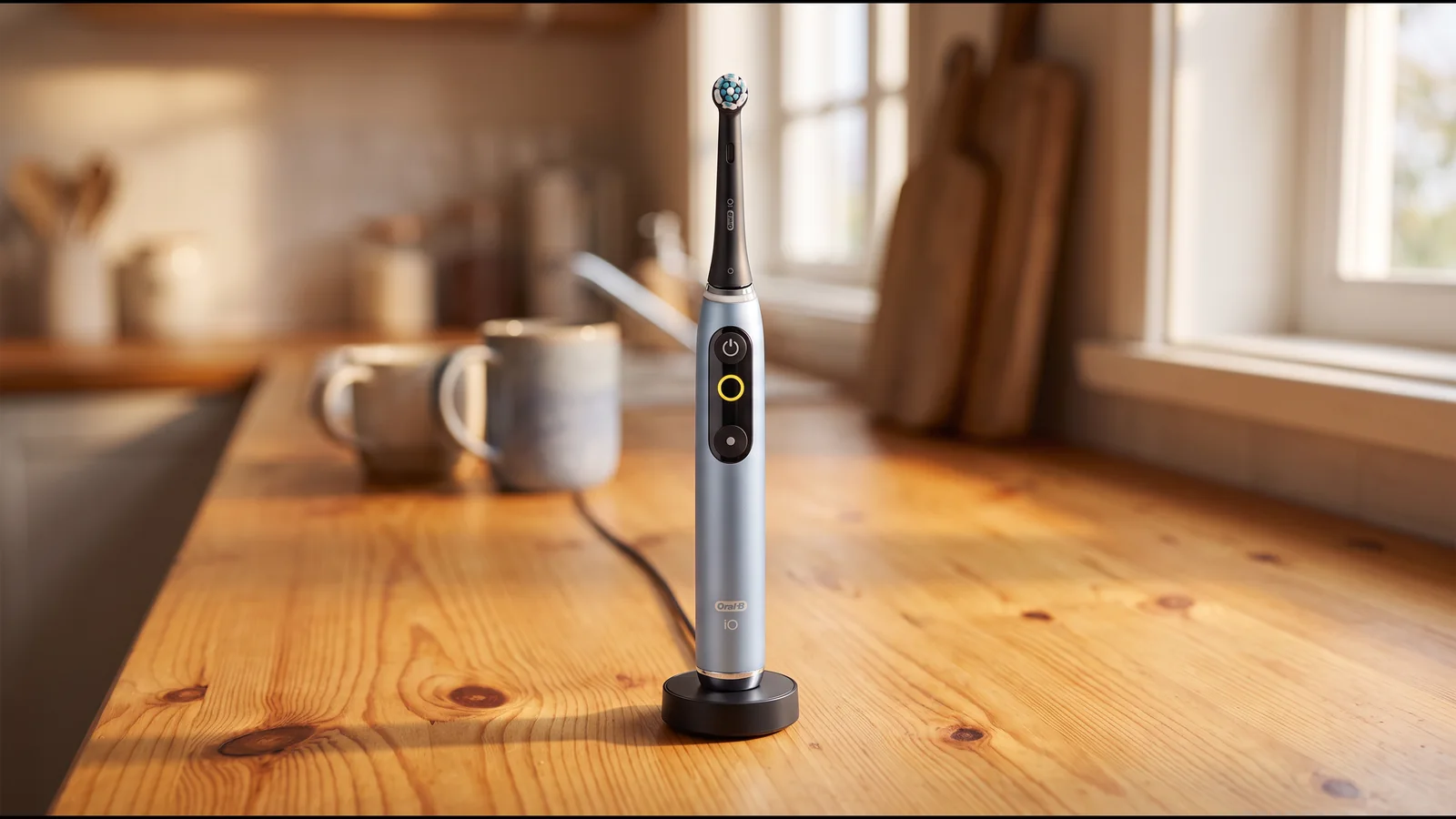
Oral-B's oscillating-rotating flagship. It has a round head with micro-vibrations, a color display, 7 modes, and a Smart Pressure Sensor that says whether you're pressing too hard, too soft, or just right. It connects to the Oral-B app for 3D teeth tracking, and comes with a Power2Go charging travel case. Product page.
Evidence
- ADA Seal. The Oral-B iO Series listing says the brush is safe and has shown efficacy in removing plaque and helping to prevent and reduce gingivitis.
- Brand claim, labeled as a brand claim: "100% more plaque" removed than a regular manual toothbrush (oralb.com).
| Price (Oct 16, 2026) | $249.99 sale / $329.99 list |
|---|---|
| Modes | 7 |
| Pressure sensor | Color light: too hard, too soft, or right |
| Timer | 2 minutes, on the color display |
| Battery | About 2 weeks; about a 3-hour magnetic charge (Oral-B) |
| Heads | $7.22–15.00 (iO Ultimate Clean: $29.99/2, $44.99/6, $64.99/9) |
| Weight | 124 g with head (oralb.com) |
Who it's for
- ✓People who brush too hard, want feedback on the handle itself, or want app coaching.
Drawbacks
- ×The most expensive pick.
- ×iO heads only fit iO handles, and the Pro 1000 does not take iO heads.
- ×App features have no shown clinical benefit beyond the core brushing action.
Philips Sonicare DiamondClean 9000: Best sonic
What it is
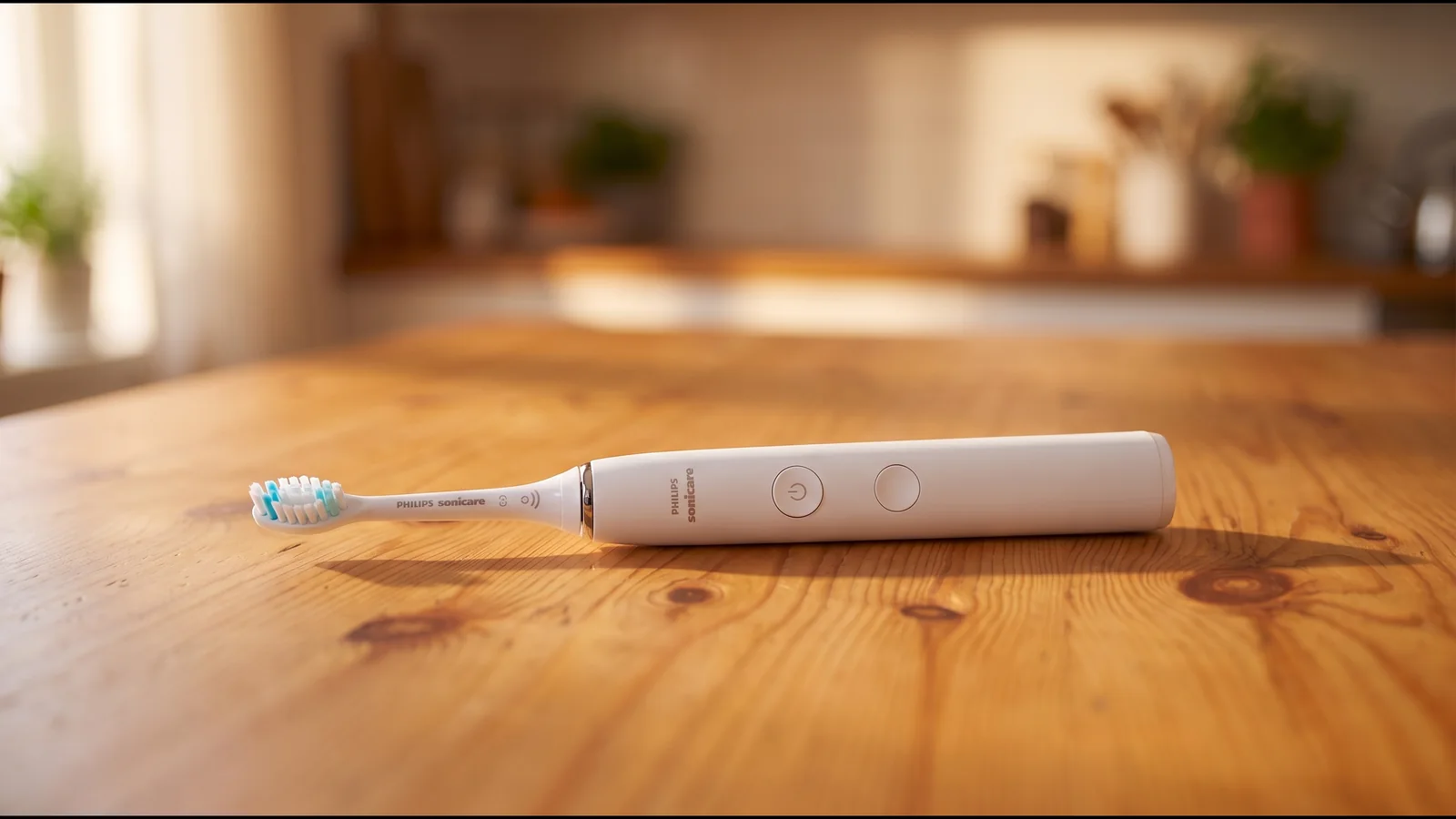
Philips' sonic brush. It makes up to 62,000 brush movements a minute and has 4 modes × 3 intensities, a pressure sensor that vibrates the handle, smart brush-head recognition, a charging glass, and a USB travel case. Product page. Spec sheet.
Evidence
- Not on ADA's Seal list (Oct 16, 2026). WSJ reported in 2026 that Philips' 4100 lost its listing. That is about the seal process, not a cleaning trial of this brush.
- Philips' own claims: "up to 10x more plaque" with the C3 head and "up to 7x healthier gums," both versus a manual toothbrush (usa.philips.com). These are brand claims.
- For sonic as a technology, El-Chami et al. 2021 found little to no difference versus oscillating-rotating at 4 weeks.
| Price (Oct 16, 2026) | No price shown on usa.philips.com. Amazon $189 for HX9911/91, via search. |
|---|---|
| Modes | 4 modes × 3 intensities |
| Pressure sensor | Handle vibrates to alert |
| Timer | SmarTimer + BrushPacer |
| Battery | Up to 14 days with regular use, Li-ion (Philips) |
| Heads | C3 4-pack HX9044/95, $48.99 → $12.25 each |
| Warranty | 2-year limited warranty (Philips) |
| Rating | 4.2/5 from 659 reviews, read from the HX9911/76 page schema on Oct 16, 2026 |
Who it's for
- ✓People who prefer a gentler, larger head or a quieter sonic feel, or who already own Sonicare heads.
Drawbacks
- ×The highest head cost of the three.
- ×No ADA Seal.
- ×A few owner reviews on Philips' page report defective units. That is anecdotal, and this page does not count them.
Oral-B Pro 1000: Best budget
What it is
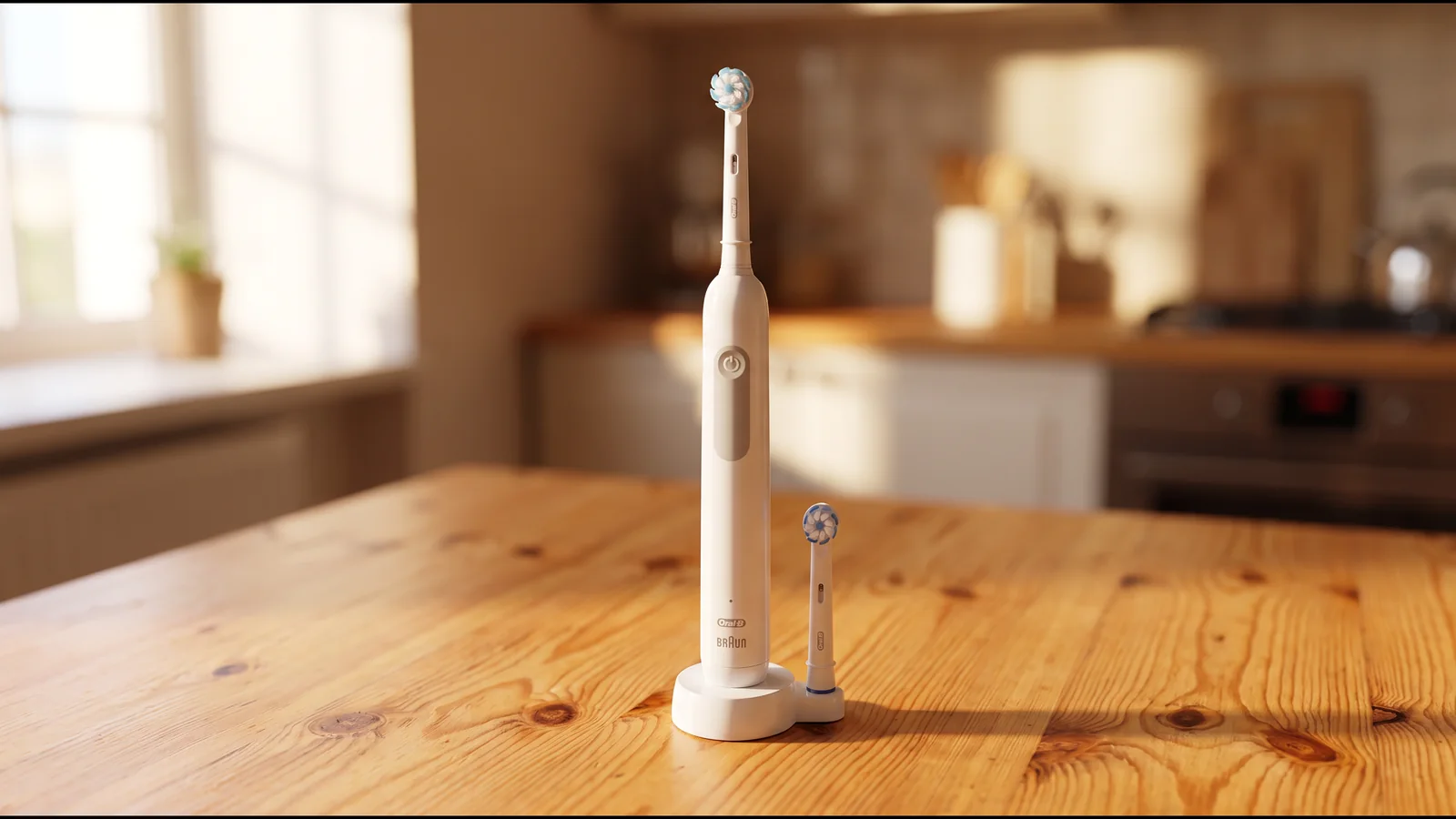
Oral-B's entry rechargeable. It has 3D oscillating-rotating-pulsating action, 3 modes, a 2-minute timer that pulses every 30 seconds, and a pressure sensor that stops the pulsations when you press too hard. There is no light. It fits standard Oral-B heads (CrossAction, Sensitive, and others) but not iO heads. Gum Care, $49.99. Delta Dental edition, $55.00.
Evidence
- ADA Seal via Oral-B Oscillating-Rotating-Pulsating (O/R/P) Electric Rechargeable Toothbrushes. Oral-B names the Pro 1000 as covered.
- Brand claim: "300% more plaque along the gum line" than a regular manual toothbrush (oralb.com).
| Price (Oct 16, 2026) | $49.99 Gum Care / $55.00 Delta Dental edition. The standalone white Pro 1000 URL now redirects to an iO listing. |
|---|---|
| Modes | 3 (Daily Clean, Whitening, Sensitive) |
| Pressure sensor | Pulsations stop; no light. Electric Teeth says the warning is not visible or audible and is easy to miss. |
| Timer | 2 minutes, with a pulse every 30 seconds |
| Battery | About 10 days, NiMH; up to a 12-hour charge (Electric Teeth) |
| Heads | $6.50–11.66 (CrossAction: $34.99/3, $64.99/10, via search snippet, Oct 16, 2026). Not iO heads. |
Who it's for
- ✓Anyone moving from a manual brush who wants the core features at the lowest cost.
Drawbacks
- ×The pressure warning is easy to miss.
- ×Shortest battery life and slowest charge of the three.
- ×Plain white single-pack availability on oralb.com has shifted to named variants (Gum Care and the Delta Dental edition).
Features that actually matter
- Pressure sensor. It is the feature that tells you, or in the Pro 1000's case tries to tell you, when you are pressing too hard.
- A 2-minute timer with a 30-second pacer, so you cover the whole mouth.
- Replacement heads you can keep buying. iO heads fit iO handles only. The Pro 1000 uses standard Oral-B heads, not iO heads.
- A handle you can rinse. This page does not cite an IP rating.
- Battery life above 7 days. All three picks clear that: about 2 weeks (iO), up to 14 days (DiamondClean 9000), and about 10 days (Pro 1000).
Features that don't matter
- AI position tracking and app coaching. No source shows a clinical benefit beyond the core brushing action.
- Bluetooth connectivity. It does not, by itself, improve a clinical outcome.
- More than three cleaning modes. Daily clean, sensitive, and whitening cover ordinary use. Extra modes are not a clinical result.
- UV sanitizer cases. This page has no cited evidence that they add a meaningful hygiene benefit.
Replacement head economics
The ADA says to replace a brush head every 3 months, or sooner if the bristles fray. The yearly figures below are four heads from the cheapest brand pack, using prices checked Oct 16, 2026. This page does not quote third-party heads, because no sourced price was available.
- Oral-B iO Ultimate Clean: $29.99/2, $44.99/6, $64.99/9, which is $7.22–15.00 each. Four heads from the 9-count pack are about $29–30 a year. iO heads fit iO handles only.
- Philips Sonicare C3, HX9044/95: $48.99 for 4, which is $12.25 each, about $49 a year.
- Oral-B CrossAction: $34.99/3 and $64.99/10, which is $6.50–11.66 each (via search snippet, Oct 16, 2026). Four heads from the 10-count pack are about $26 a year. These fit the Pro 1000, not the iO.
What dentists check
The ADA Seal, a pressure sensor, and a timer.
The bottom line
Electric brushes beat manual ones, modestly. Cochrane 2014 found 11% less plaque and 6% less gingivitis at 1–3 months, and 21% less plaque and 11% less gingivitis after more than 3 months, with unclear clinical importance. The Oral-B iO Series 9 ($249.99 sale / $329.99 list on Oct 16, 2026) is the best overall pick on this page if you want a color pressure light and the ADA Seal. The Philips Sonicare DiamondClean 9000 is the sonic pick: up to 14 days of battery, no ADA Seal, and the highest head cost. The Oral-B Pro 1000 Gum Care is $49.99, ADA-accepted, and does the clinically important parts: a 2-minute timer, a 30-second pacer, and a pressure cut-off whose warning is easy to miss. Oscillating-rotating and sonic are close (El-Chami et al. 2021). Pick by feel, then use it twice a day.
Frequently Asked Questions
Yes, modestly. Cochrane 2014 (Yaacob et al., CD002281.pub3, 56 trials, 5,068 participants): 11% less plaque and 6% less gingivitis at 1–3 months; 21% and 11% after three months. The review says the clinical importance is unclear.
Independent reviews find little to no difference at 4 weeks (El-Chami et al. 2021). Oral-B currently holds the ADA Seal for the rechargeables on this page, and Sonicare does not (checked Oct 16, 2026).
Oral-B markets itself as the "#1 dentist-recommended brand," which is a Procter & Gamble survey claim. Independently, look for the ADA Seal. Both Oral-B picks on this page have it.
Of these three, the Oral-B iO Series and the Oral-B Pro 1000 (the Pro 1000 through the oscillating-rotating-pulsating listing; Oral-B names it as covered). The DiamondClean 9000 was not on the ADA Seal list on Oct 16, 2026.
Every 3 months, or sooner if the bristles fray (ADA).
No trial in the reviews cited here shows that one technology is safer. A visible pressure sensor and a sensitive mode matter more. All three brushes have a sensitive or gum mode. The iO warns with a color light. The Pro 1000 only stops its pulsations, with no light, and an independent test says that warning is easy to miss.
On this page, the Oral-B Pro 1000. The Gum Care variant was $49.99 on Oct 16, 2026, and it is ADA-accepted.