Mouth Tape for Sleep Apnea: What the Evidence Actually Shows
Sleep apnea is a medical condition in which the airway repeatedly narrows or closes during sleep. It needs a doctor’s diagnosis and treatment. Here’s what happens during an apnea, the warning signs, how common it is, and what mouth tape has and hasn’t been shown to do.

Mouth Tape and Sleep Apnea: What Research Says — and What It Doesn’t
Mouth tape is not a treatment for sleep apnea. Diagnosis takes a sleep study ordered by a clinician. Treatment, including CPAP, is prescribed and managed by a doctor. Some people with a diagnosis ask their sleep doctor about mouth leak or mouth breathing, and that conversation belongs with the doctor, not with a product label. 46 brands researched and scored, 7 recommended, on safety, comfort, and hold strength.



7 Key Things to Understand About Sleep Apnea
Many people with sleep apnea don’t know they have it
Every time your airway collapses, your brain fires an emergency signal to restart breathing. It works — you gasp, snore, swallow air — but you never fully wake up. You have no memory of it. You just feel wrecked in the morning and don’t know why.
This isn’t "bad sleep." It’s a measurable medical event happening dozens of times per hour, and untreated severe sleep apnea is linked to cardiovascular problems. In a 10-year study of men, untreated severe OSA had about 3 times the rate of fatal cardiovascular events of healthy men (Marin et al., Lancet 2005).[2]
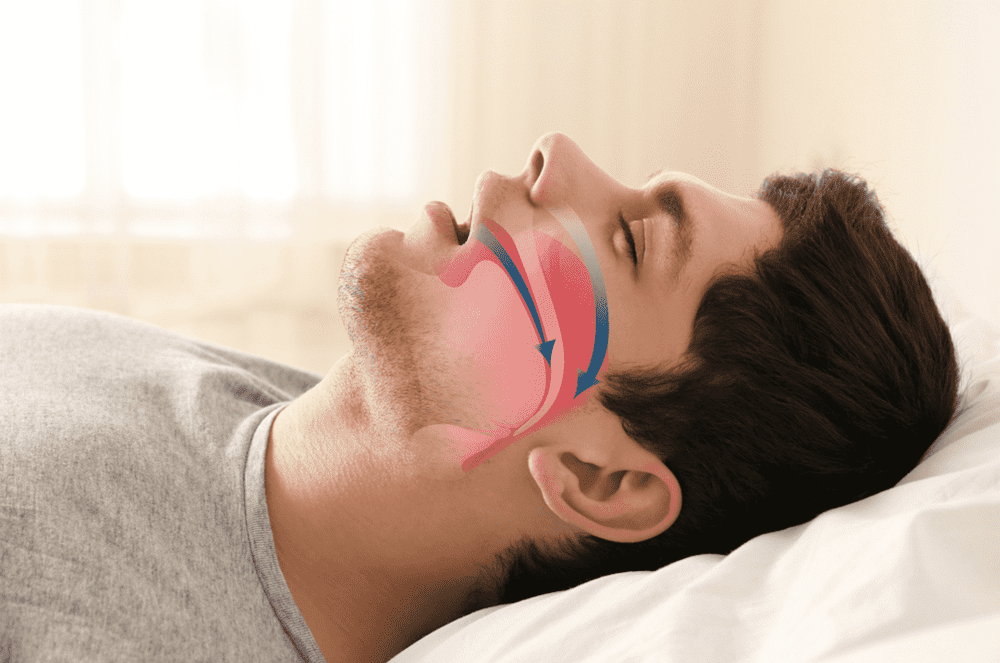
An estimated 29.4 million U.S. adults have obstructive sleep apnea, and about 80% of them are undiagnosed.[1]
Here’s What’s Physically Happening in Your Throat
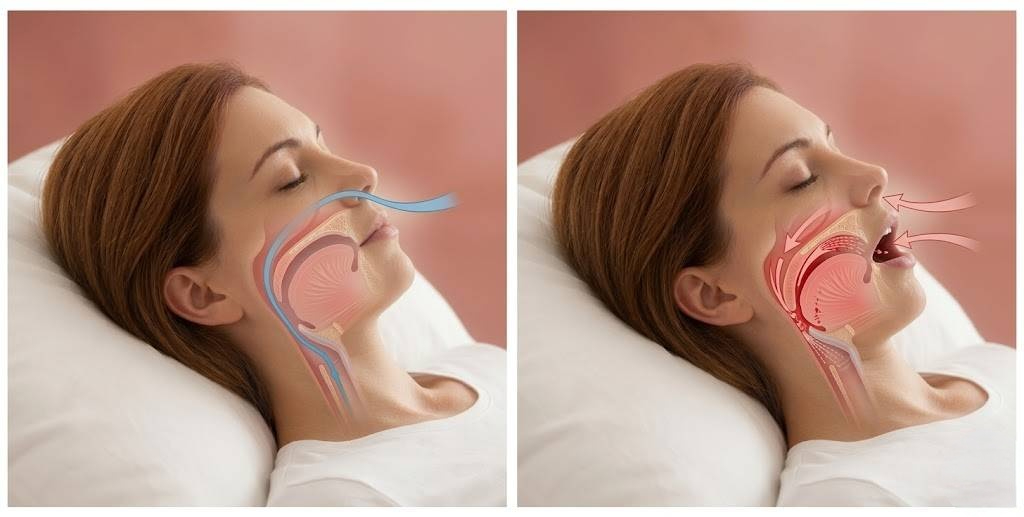
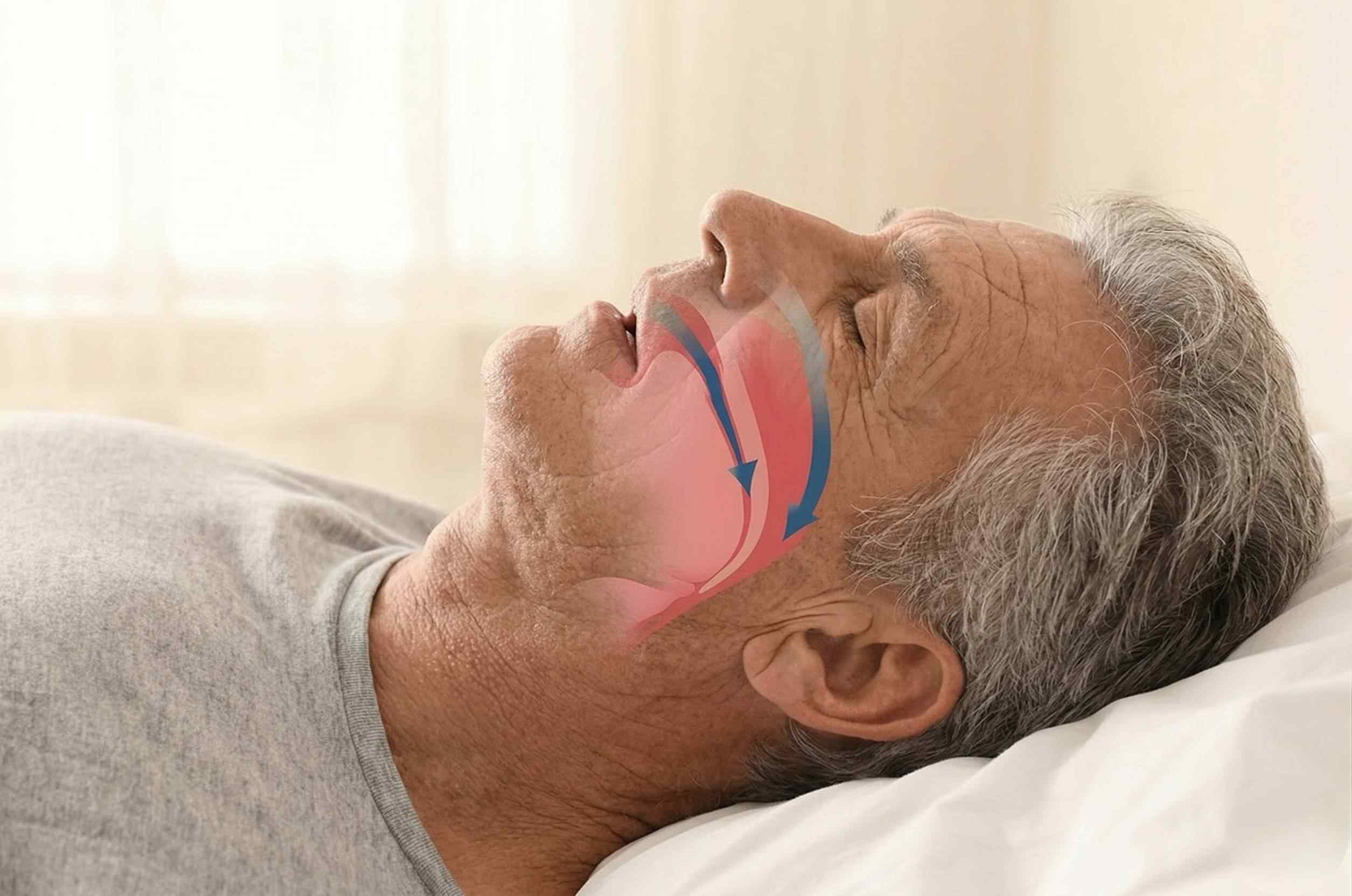
Your throat is a soft tube held open by muscles. When you fall asleep, those muscles relax. In people with sleep apnea, the tube narrows enough to choke airflow — or pinches shut entirely. Breathing stops. Blood oxygen drops. Your brain fires a stress response to force the muscles back open.
This takes about 10 to 60 seconds each time. Then you fall back asleep, the muscles relax again, and it happens again. Five times an hour is mild. Thirty is moderate. Some people hit 100+. You never reach the deep sleep stages where your body actually repairs itself.
The Sleep Apnea Cycle
You fall asleep — throat muscles relax, airway begins to narrow
Airway collapses — breathing stops for 10–60 seconds, oxygen drops
Brain jolts you awake — micro-arousal restores breathing but fragments sleep
Repeat all night — 5–100× per hour, you never reach deep sleep
The result? A sleep debt that no amount of coffee can repay. Your blood pressure creeps up. Your cortisol stays elevated. Your body ages faster than it should. And because you never remember waking, you blame the mattress, the stress, the coffee — everything except what’s actually happening.
46 brands researched and scored, 7 recommended. Here’s what we found.
We scored every tape on adhesive safety, comfort, breathability, and value.
Your Mouth Is Open at Night. That’s the Problem.
The position of your jaw determines whether your airway stays open or collapses. When the mouth falls open during sleep, the jaw and tongue can shift backward, which may narrow the airway.
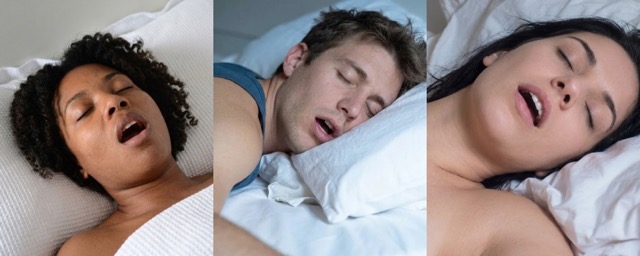
When the mouth falls open during sleep, the jaw and tongue can shift backward, which may narrow the airway. Open mouth → jaw drops → tongue moves back → the airway can narrow.
- Jaw stays closed, tongue rests on palate
- Airway stays open and stable
- Air is filtered, warmed, and humidified
- Jaw drops, tongue falls back into airway
- Airway narrows, collapse risk increases
- Air is not filtered, warmed, or humidified the same way
What studies of mouth taping measured
The evidence is thin. In the best-known study, 20 mouth-breathers with mild sleep apnea taped their mouths for one week, and there was no control group. Their median snoring index fell 47% and their median AHI fell from 8.3 to 4.7 events per hour (Lee YC et al., Healthcare 2022).[4] A study this small and uncontrolled can’t show that tape treats sleep apnea. It doesn’t apply to moderate or severe sleep apnea, or to anyone told to use CPAP.
CPAP requires a doctor
CPAP (continuous positive airway pressure) is the standard prescribed therapy for moderate to severe obstructive sleep apnea. Many people find it hard to keep using: across 82 studies over 20 years, about a third of patients (34.1%) were non-adherent (Rotenberg et al. 2016).[3] If CPAP is uncomfortable, the answer is to work with your sleep clinician on fit, mask type, settings, or other prescribed options.
CPAP is a prescription therapy. Starting it, changing settings, and stopping all require your doctor. Mouth tape is not a treatment for sleep apnea. It is not an alternative or add-on to CPAP, and it isn’t a reason to delay diagnosis or stop prescribed therapy. If you have or suspect sleep apnea, talk to a doctor before using any sleep product.
Where mouth tape fits, and where it doesn’t
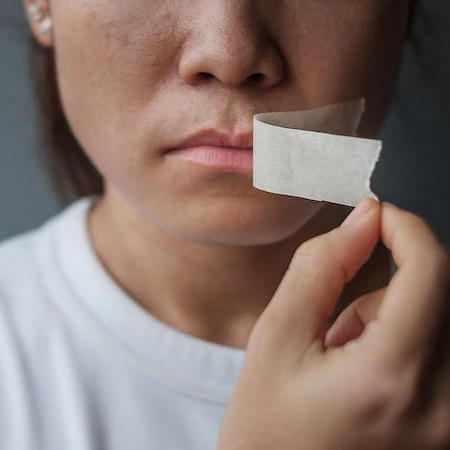
After all that science about airway collapse, jaw position, and nasal breathing — some people try a small strip of tape over the lips. It can hold the mouth closed while they sleep. Mouth tape is not a treatment for sleep apnea.
We know how it sounds. The biomechanics are straightforward. The studies do not establish mouth tape as a treatment:
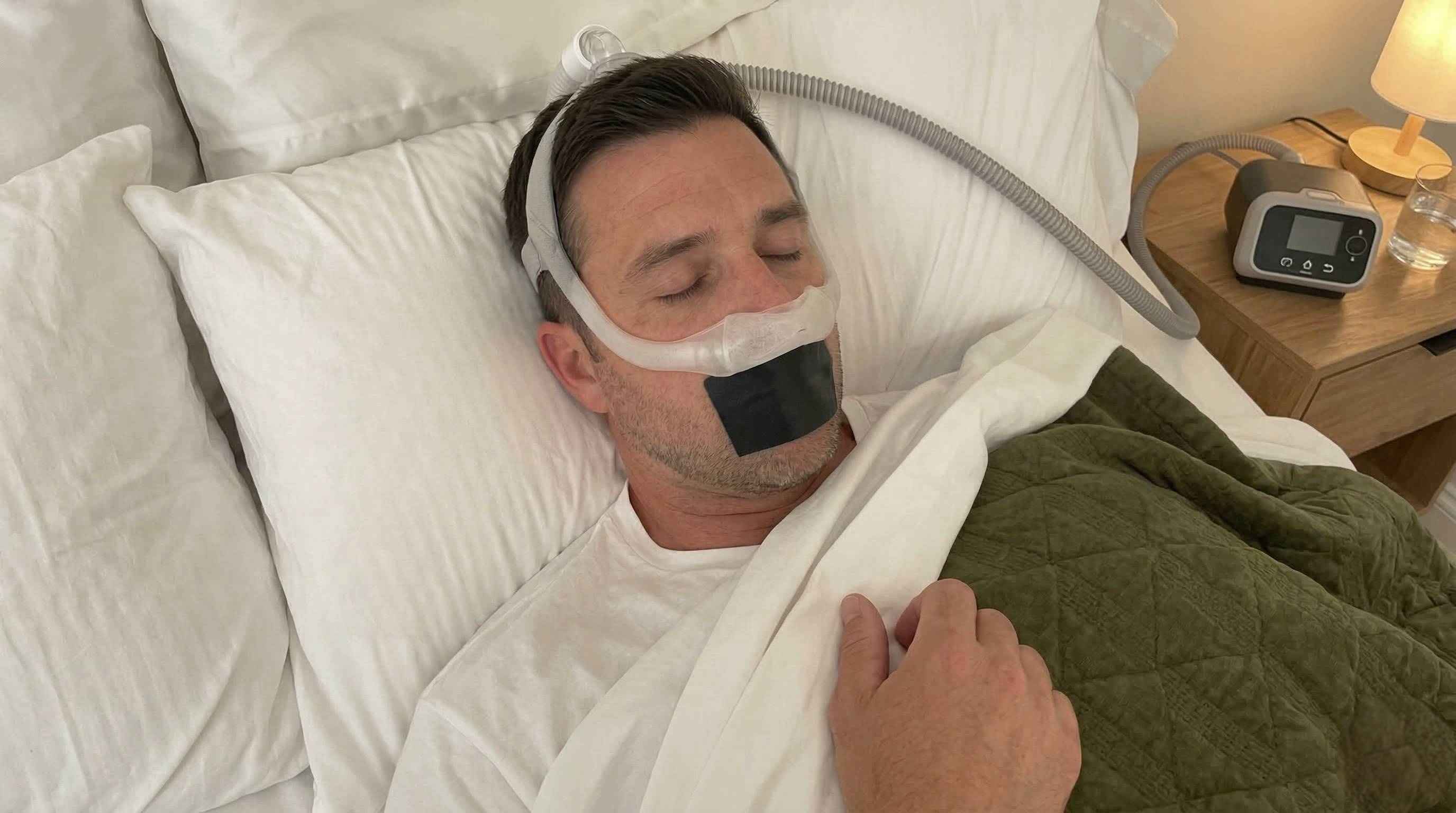
Mouth closed can keep the jaw from dropping as far. That is a position observation. It is not a treatment claim for sleep apnea, and it is not an oxygen-absorption result.
Most people take a few nights to get used to sleeping with tape on. We do not promise night-one results. Retail tape often costs less than $1 a night.
Mouth tape isn't a treatment for sleep apnea. If you snore heavily or gasp or choke in your sleep, get assessed first; don't tape with a blocked nose, and don't use on children without clinician guidance.
What research on mouth taping and mild obstructive sleep apnea measured — and what it did not establish.
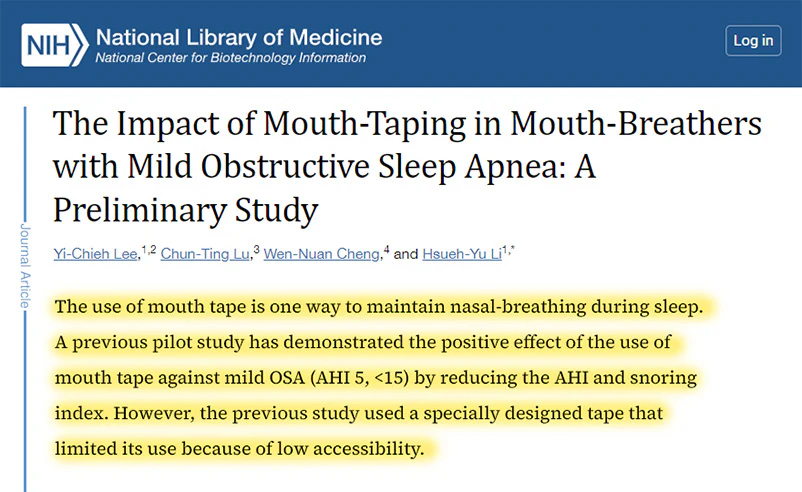
Snoring — in the 20-person study above, median snoring index fell 47% over one week, with no control group.[4]
How people feel in the morning — reports vary. Customer stories are not a clinical measure.
Dry mouth — keeping the mouth closed can leave saliva in place. Comfort and hold vary by person.
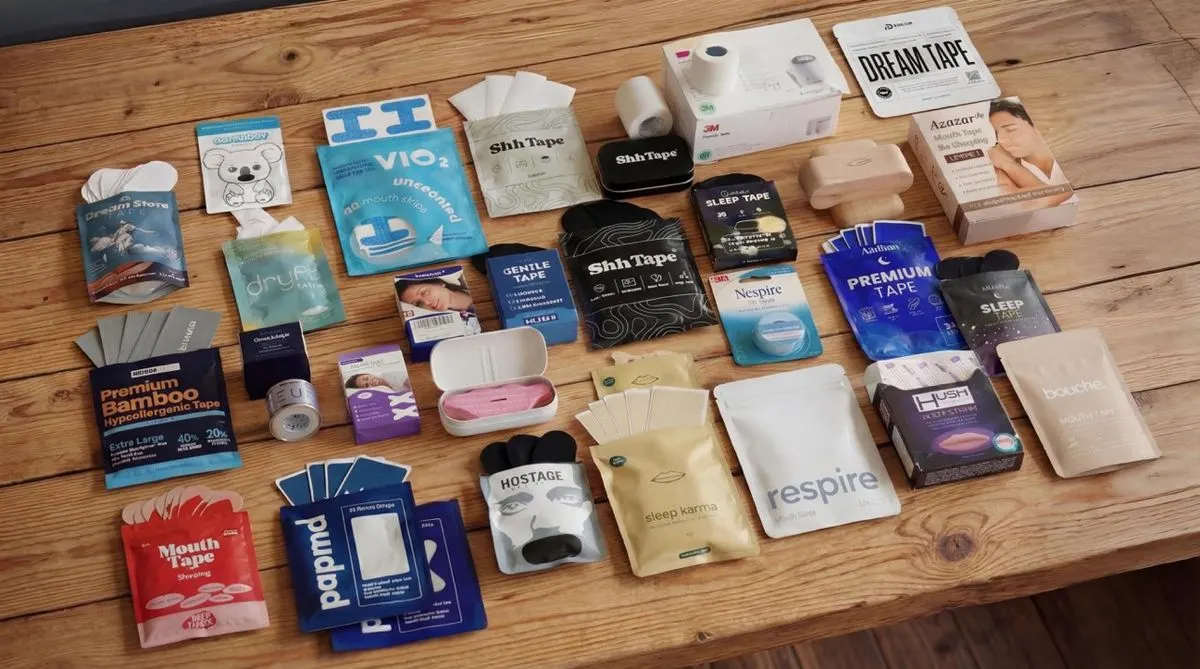
46 brands researched and scored, 7 recommended. Here’s what we found.
We scored every tape on adhesive safety, comfort, breathability, and value.
300 Million TikTok Views Later, Everyone’s Talking About It
Mouth taping spread quickly on social video. Popularity is not evidence, and we do not promise night-one results.
The reason it spread so fast is simple: people try it, talk about the experience, and the videos travel. But popularity has created a new problem. We do not promise night-one results.
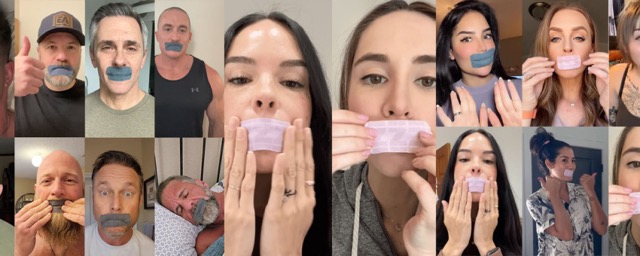
But popularity has a downside. Dozens of brands have flooded the market, and the quality varies wildly. Some tapes fall off by 2am. Others use adhesives with undisclosed chemicals. A few feel suffocating rather than breathable.
If you don’t have sleep apnea, or your doctor has cleared it, and you want to try tape for open-mouth snoring or dry mouth, the details below matter.
If you’re going to try mouth taping, here’s what to know.
Mouth tape sits on your face for 7 to 9 hours a night. The adhesive touches your skin longer than almost any other product you use. So the details matter.
- Adhesive lab-tested to ISO 10993 (brand-published; not an Evident lab test)
- Breathable, natural material (bamboo silk or similar)
- Full-coverage shape that seals properly
- Holds all night, removes cleanly without residue
- Brand discloses full ingredient list
- Undisclosed or synthetic adhesive ingredients
- Compounds flagged by EWG or ECHA for skin sensitization
- Small strips or X-shapes that don’t seal properly
- Tapes that leave residue or cause redness
- Non-breathable plastic or film materials
46 Brands Researched. 7 Recommended.
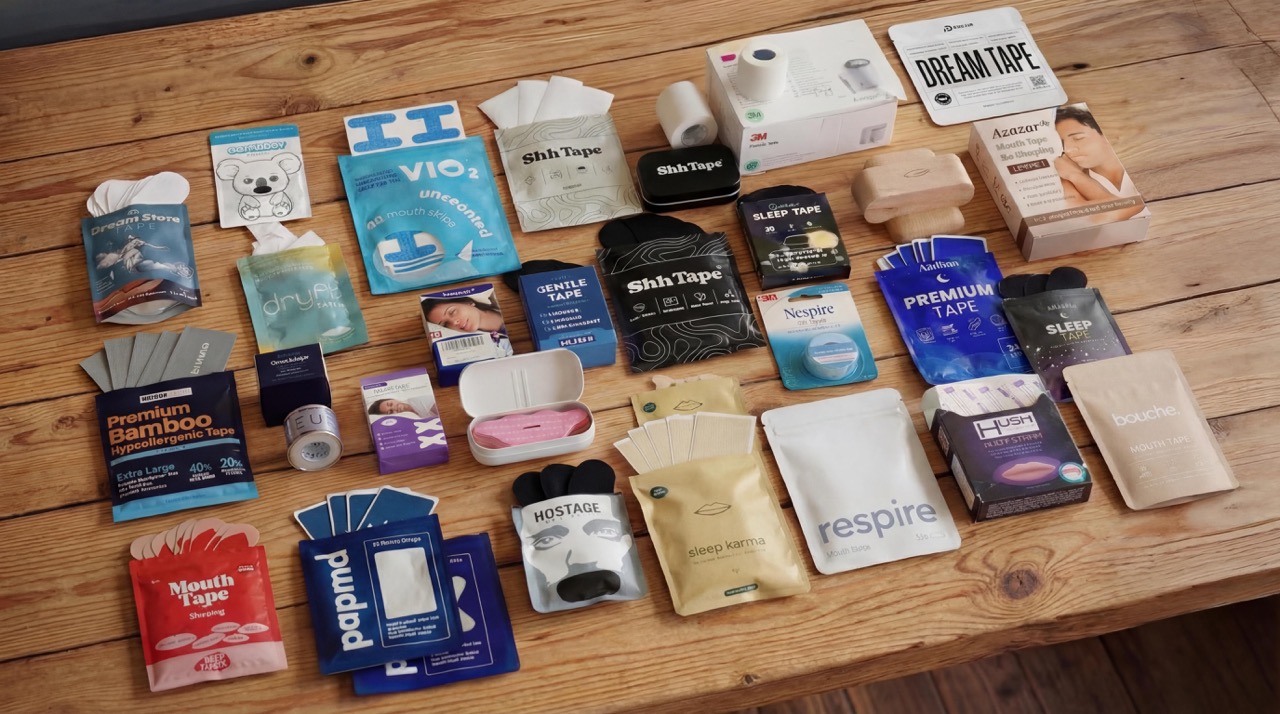
46 brands researched and scored, 7 recommended. Every brand was scored on five criteria: adhesive safety, hold strength, breathability, comfort, and value.
The results were eye-opening. Most brands had at least one serious issue — undisclosed adhesive chemicals, poor seal shapes that let air leak through, or adhesives that gave out by 2am. Only a handful scored well on all five criteria.
Read the full review.
Adhesive safety. Hold strength. Breathability. Comfort. Value. See how every tape scored.
Frequently Asked Questions
Common signs include loud snoring, pauses in breathing or gasping during sleep, daytime sleepiness, and morning headaches. Only a sleep study ordered by a clinician, either in a lab or at home, can diagnose it (AASM Sleep Education, https://sleepeducation.org/sleep-disorders/obstructive-sleep-apnea/).
No. Mouth tape is not a treatment for sleep apnea and is not a replacement for or add-on to CPAP. CPAP requires a doctor. Don’t change or stop it without your sleep clinician.
Don’t tape your mouth if your nose is blocked, if you have or suspect sleep apnea and haven’t talked to your doctor, or on children. Use tape you can remove easily.
Most people take a few nights to get used to sleeping with tape on. Start with a partial strip if it feels strange. Comfort and hold vary by person — we do not promise night-one results.
If you can breathe through your nose during the day without significant difficulty, mouth taping is generally safe. If you have severe nasal obstruction, address that with an ENT specialist first. Simple test: close your mouth and breathe through your nose for two minutes. If it’s comfortable, you’re likely a good candidate. If you have nasal obstruction, see an ENT first.
References
- American Academy of Sleep Medicine / Frost & Sullivan. Hidden Health Crisis Costing America Billions. 2016. https://aasm.org/resources/pdf/sleep-apnea-economic-crisis.pdf
- Marin JM, et al. Lancet. 2005;365(9464):1046-53. https://pubmed.ncbi.nlm.nih.gov/15781100/
- Rotenberg BW, et al. J Otolaryngol Head Neck Surg. 2016;45(1):43. https://pubmed.ncbi.nlm.nih.gov/27542595/
- Lee YC, et al. Healthcare (Basel). 2022;10(9):1755. https://pubmed.ncbi.nlm.nih.gov/36141367/
- AASM Sleep Education. Obstructive Sleep Apnea. https://sleepeducation.org/sleep-disorders/obstructive-sleep-apnea/