
Black Seed Oil: What the Research Actually Shows
Black seed (Nigella sativa, also called black cumin) has been used in Middle Eastern and South Asian traditional medicine for centuries. Unlike many trending herbs, it has a real body of randomized trials. Here is what they show, and what they do not.
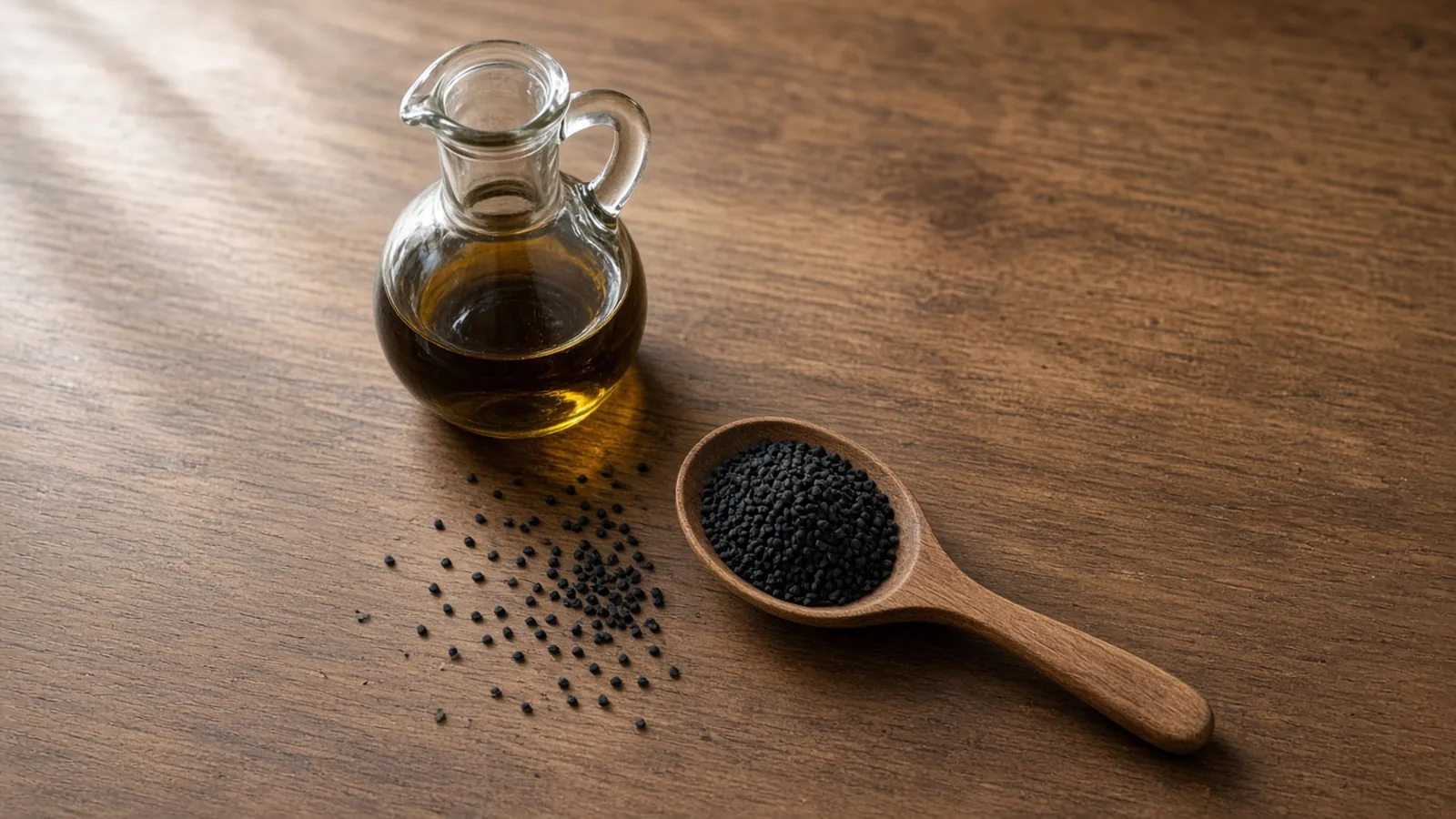
Quick Summary
The best-supported findings are modest lab-marker changes at about 1 to 3 grams a day, not a replacement for medication.
What the trials measured
| Feature | Pooled effect vs control | Source |
|---|---|---|
| Total cholesterol | About −16.8 mg/dL | 50 RCTs, Phytotherapy Research 2020 |
| LDL cholesterol | About −18.5 mg/dL | Same 50-trial analysis |
| Triglycerides | About −15.7 mg/dL | Same 50-trial analysis |
| Fasting glucose | About −15.2 mg/dL. Oil beat powder in a 17-trial analysis. | 2020 pool and PMID 30873688 |
| HbA1c | About −0.45 points in the 50-trial pool | Phytotherapy Research 2020 |
| Blood pressure | About −3.3 / −2.8 mmHg. Powder beat oil in this pool. | 11 RCTs, n=860, PMID 27512971 |
| CRP and TNF-alpha | No significant change | 50-trial analysis |
Trials were short, often small, and used different products. These are biomarker changes, not proof of fewer heart attacks or diabetes complications.
Oil, capsules, or seeds?
Oil is flexible on dose and tastes peppery. Capsules are easier, but check how many you need to reach 1 gram. Ground seeds were used in several blood-pressure trials, where powder outperformed oil.
Thymoquinone is the compound most brands advertise. Percentages vary. Treat a TQ percent as brand-stated unless a certificate of analysis posts the number. We are not printing TQ percents we did not see.
How much was studied?
Most trials used roughly 1 to 3 grams a day. Oregano-plus-black-seed softgels from Resilia and MAJU each list 200 mg of black seed oil per serving. See the comparison.
Products with a stated black seed dose
| Feature | Black seed per serving | Price |
|---|---|---|
| Heritage Store capsules | 1,300 mg | $27.49 / 90 capsules |
| MAJU capsules | 1,000 mg per 2 gelcaps | $27.99 / 60 |
| Heritage Store organic oil | 4.6 g per serving, brand-stated | $32.99 / 8 oz |
| MAJU cold-pressed oil | 1 teaspoon on the page. Gram amount not stated. | $37.99 / 8 oz |
| Micro Ingredients with oregano | 3,000 mg black cumin oil plus 100 mg oregano oil. 80-day supply, brand-stated. | $29.95 / 240 softgels |
| Gaia black seed capsules | Not stated in the product feed | $30.59 / 60 |
Micro Ingredients says the softgels are third-party lab tested. That is brand-stated. We did not open a certificate.
Side effects
Common complaints are stomach upset, bloating, nausea, an unpleasant taste, or burping. Black seed may add to glucose-lowering or blood-pressure medicines. Ask your clinician, and monitor if you take them.
Ask first in pregnancy and breastfeeding (not well studied), with kidney or liver disease, before surgery, and with a bleeding disorder. If you put it on skin, patch-test first.
Who this is for
Who Might Like This
- ✓Adults interested in cholesterol or glucose markers who are working with their clinician.
Who Should Consider Alternatives
- ×You take diabetes, blood-pressure, or anticoagulant drugs, or you have kidney or liver disease.
- ×Pregnancy or breastfeeding, unless your clinician approves.
Our verdict
Black seed oil is one of the better-studied traditional supplements. Expect modest lab-marker changes at gram-level doses, not dramatic effects. Pick a product that states milligrams per serving clearly and can get you to about 1 gram a day or more.
Related guides
Sources
How we checked
On October 21, 2026, we checked Heritage Store capsules ($27.49 / 90, 1,300 mg), Heritage organic oil ($32.99 / 8 oz, 4.6 g per serving), MAJU capsules ($27.99, 1,000 mg per 2 gelcaps), MAJU oil ($37.99 / 8 oz, teaspoon direction, no gram dose), Micro Ingredients ($29.95 / 240, 3,000 mg black cumin oil plus 100 mg oregano oil), and Gaia ($30.59 / 60, no dose in the feed).
The pooled trial numbers are the figures in the cited meta-analyses. We did not print a thymoquinone percentage for any brand.
Frequently Asked Questions
In randomized trials, it was linked to modestly lower total and LDL cholesterol, triglycerides, fasting glucose, and HbA1c, and slightly lower blood pressure. Those are lab markers, not a promise about disease.
Studies commonly used about 1 to 3 grams a day. Follow your product label and check with your clinician.
Mostly stomach upset and nausea. It may add to blood-sugar or blood-pressure medicines.
Both have been studied. Capsules make dosing easier, but check how many you need for 1 gram or more.
Studies did not establish an ideal time. Taking it with food may reduce stomach upset.
That combination has not been studied. See our comparison.
Yes. Nigella sativa is often called black cumin. It is not the same plant as culinary cumin.
These statements have not been evaluated by the Food and Drug Administration. This product is not intended to diagnose, treat, cure, or prevent any disease. Evident does not sell any of these products and uses no affiliate links.