Mouth Tape for Sleep Apnea: What the Evidence Actually Shows
Sleep apnea doesn’t start in your throat — it starts with your mouth. You snore. You wake up exhausted. You’ve tried everything. Here’s what research says about airway position at night, what mouth tape has and hasn’t been shown to do, and the cases where taping is the wrong call.

Mouth Tape and Sleep Apnea: What Research Says — and What It Doesn’t
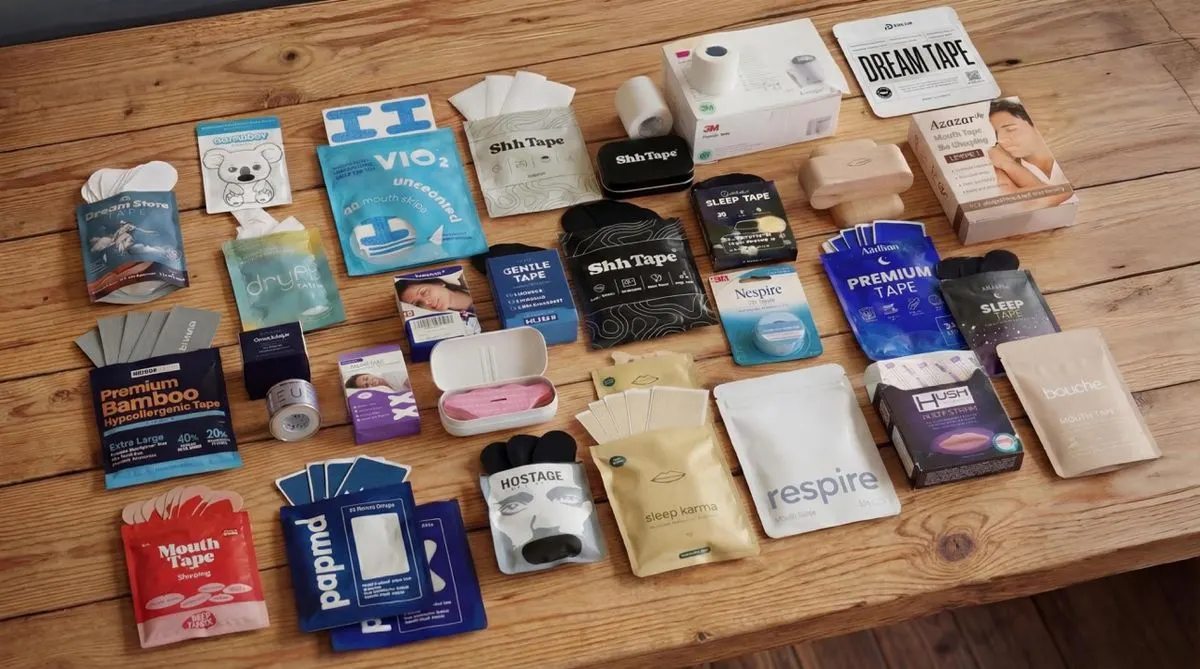
Nasal breathing is linked in the literature to airway stability. Mouth tape is a consumer sleep-hygiene product some people try after talking with a clinician — not a substitute for diagnosis or prescribed therapy (including CPAP when indicated). 46 brands researched and scored, 7 recommended, on safety, comfort, and hold strength.



7 Key Things to Understand About Sleep Apnea
You’re Waking Up 40 Times a Night and Don’t Know It
Every time your airway collapses, your brain fires an emergency signal to restart breathing. It works — you gasp, snore, swallow air — but you never fully wake up. You have no memory of it. You just feel wrecked in the morning and don’t know why.
This isn’t "bad sleep." It’s a measurable medical event happening dozens of times per hour, and it’s linked to heart disease, stroke, type 2 diabetes, and depression. The morning headaches, brain fog, and dry mouth are damage reports from a body that never got to recover.
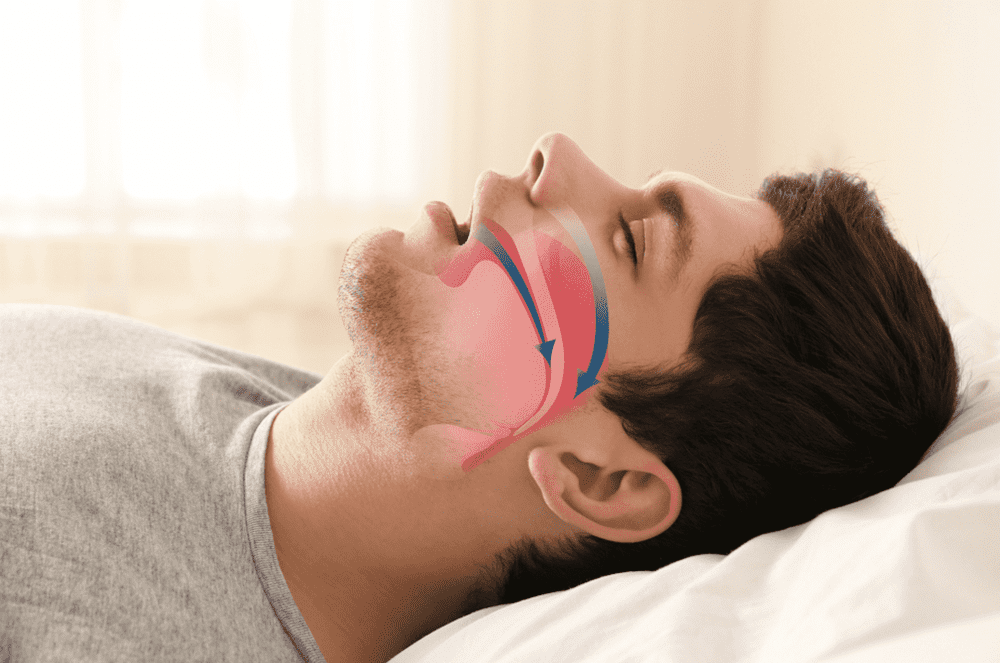
Sound familiar? You’re not alone. Sleep apnea affects an estimated 30 million Americans, and the vast majority don’t know they have it.[1]
Here’s What’s Physically Happening in Your Throat
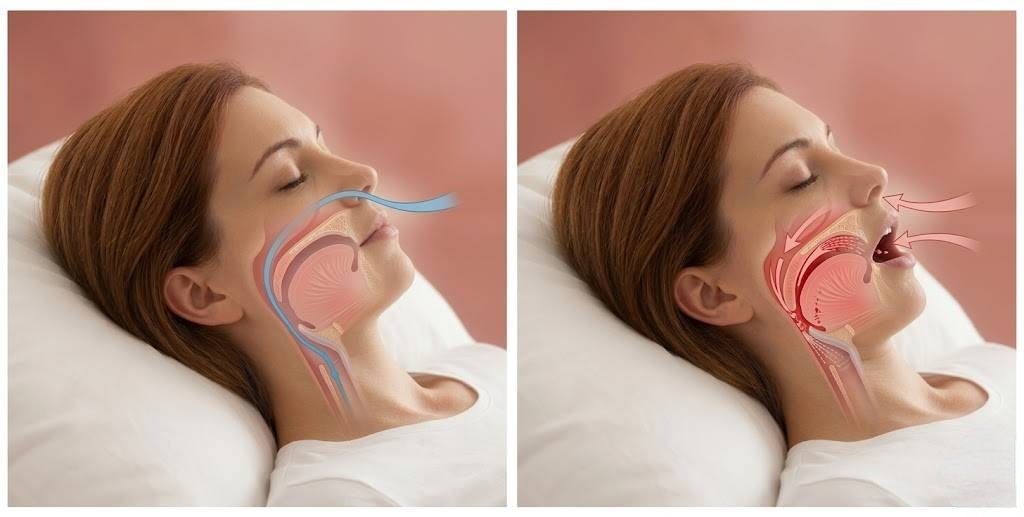
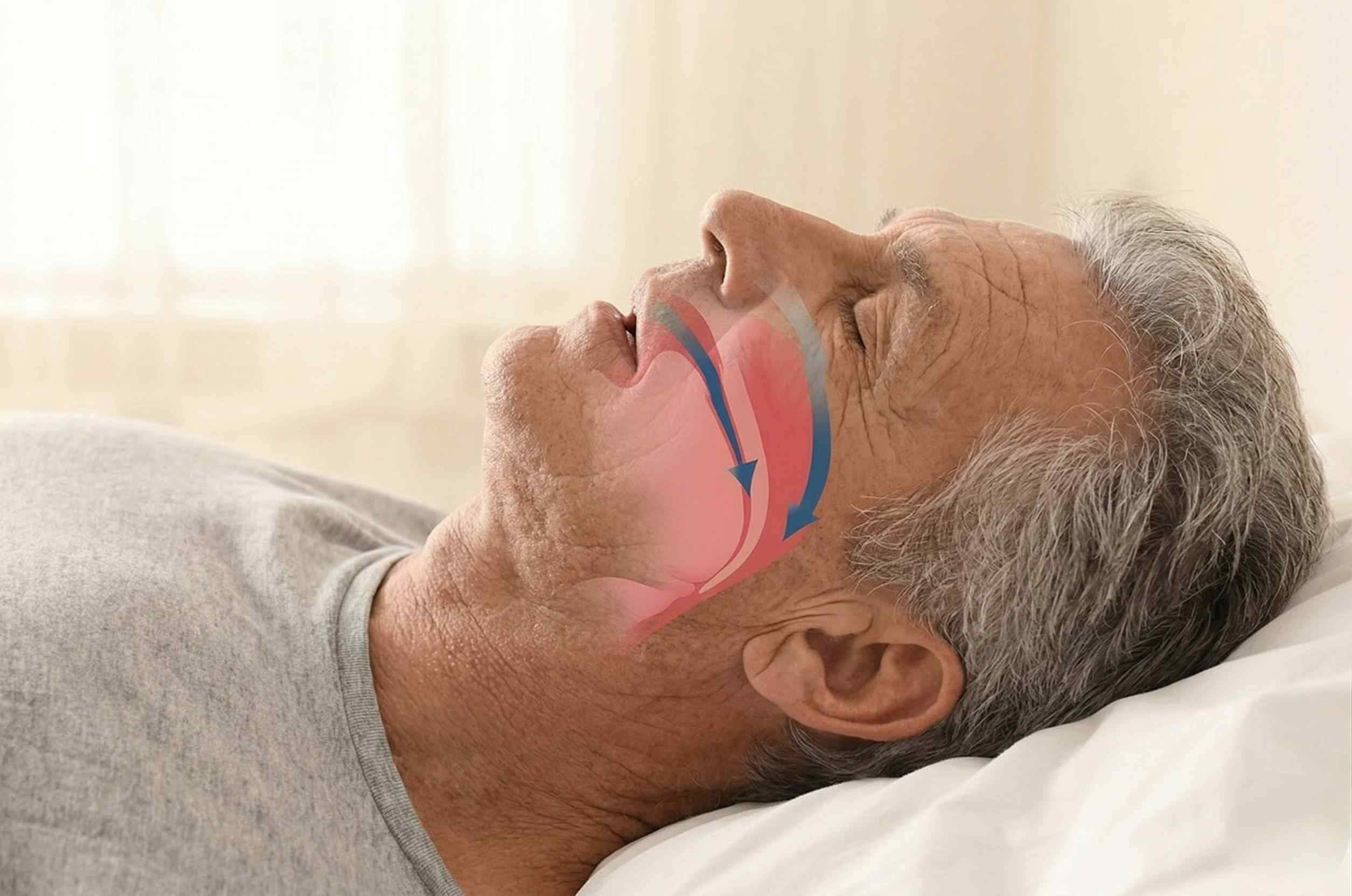
Your throat is a soft tube held open by muscles. When you fall asleep, those muscles relax. In people with sleep apnea, the tube narrows enough to choke airflow — or pinches shut entirely. Breathing stops. Blood oxygen drops. Your brain fires a stress response to force the muscles back open.
This takes about 10 to 60 seconds each time. Then you fall back asleep, the muscles relax again, and it happens again. Five times an hour is mild. Thirty is moderate. Some people hit 100+. You never reach the deep sleep stages where your body actually repairs itself.
The Sleep Apnea Cycle
You fall asleep — throat muscles relax, airway begins to narrow
Airway collapses — breathing stops for 10–60 seconds, oxygen drops
Brain jolts you awake — micro-arousal restores breathing but fragments sleep
Repeat all night — 5–100× per hour, you never reach deep sleep
The result? A sleep debt that no amount of coffee can repay. Your blood pressure creeps up. Your cortisol stays elevated. Your body ages faster than it should. And because you never remember waking, you blame the mattress, the stress, the coffee — everything except what’s actually happening.
“I had no idea I was waking up 40+ times per night until I did a sleep study. I thought I was just a ‘bad sleeper.’ Turns out my airway was collapsing all night long.”
46 brands researched and scored, 7 recommended. Here’s what we found.
We scored every tape on adhesive safety, comfort, breathability, and value.
Your Mouth Is Open at Night. That’s the Problem.
Here’s the part your doctor probably hasn’t explained: the position of your jaw determines whether your airway stays open or collapses. And if your mouth is open — which it almost certainly is — your jaw is dropping, your tongue is sliding backward, and you’re actively making every obstruction worse.
68% of sleep apnea patients are habitual mouth breathers.[4] It’s not a coincidence. It’s a biomechanical chain reaction.
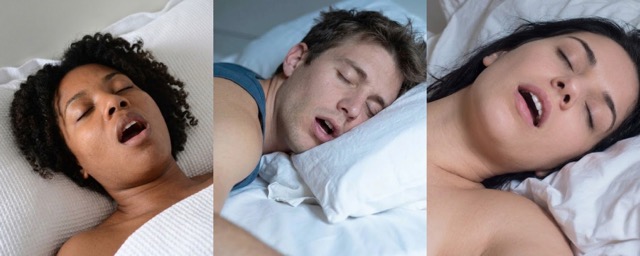
When your mouth opens during sleep, your lower jaw drops down and back. Your tongue — which is attached to your jaw — follows it, sliding directly into the narrowest part of your airway. Open mouth → dropped jaw → tongue falls back → airway collapses. Every single time.
- Jaw stays closed, tongue rests on palate
- Airway stays open and stable
- Air is filtered, warmed, and humidified
- Activates parasympathetic (rest & recover) nervous system
- Jaw drops, tongue falls back into airway
- Airway narrows, collapse risk increases
- Air is not filtered, warmed, or humidified the same way
- Triggers sympathetic (stress/fight-or-flight) response
- Dry mouth, bacteria growth, dental decay
This isn’t debated in sleep medicine. The relationship between mouth breathing and airway collapse is well-established. The real question is: how do you keep someone’s mouth closed while they’re unconscious?
Close the Mouth, Open the Airway. What the Research Measured.
Researchers have known for decades that nasal breathing keeps the airway structurally stable in ways mouth breathing can’t. But the strength of the evidence is what surprises people:
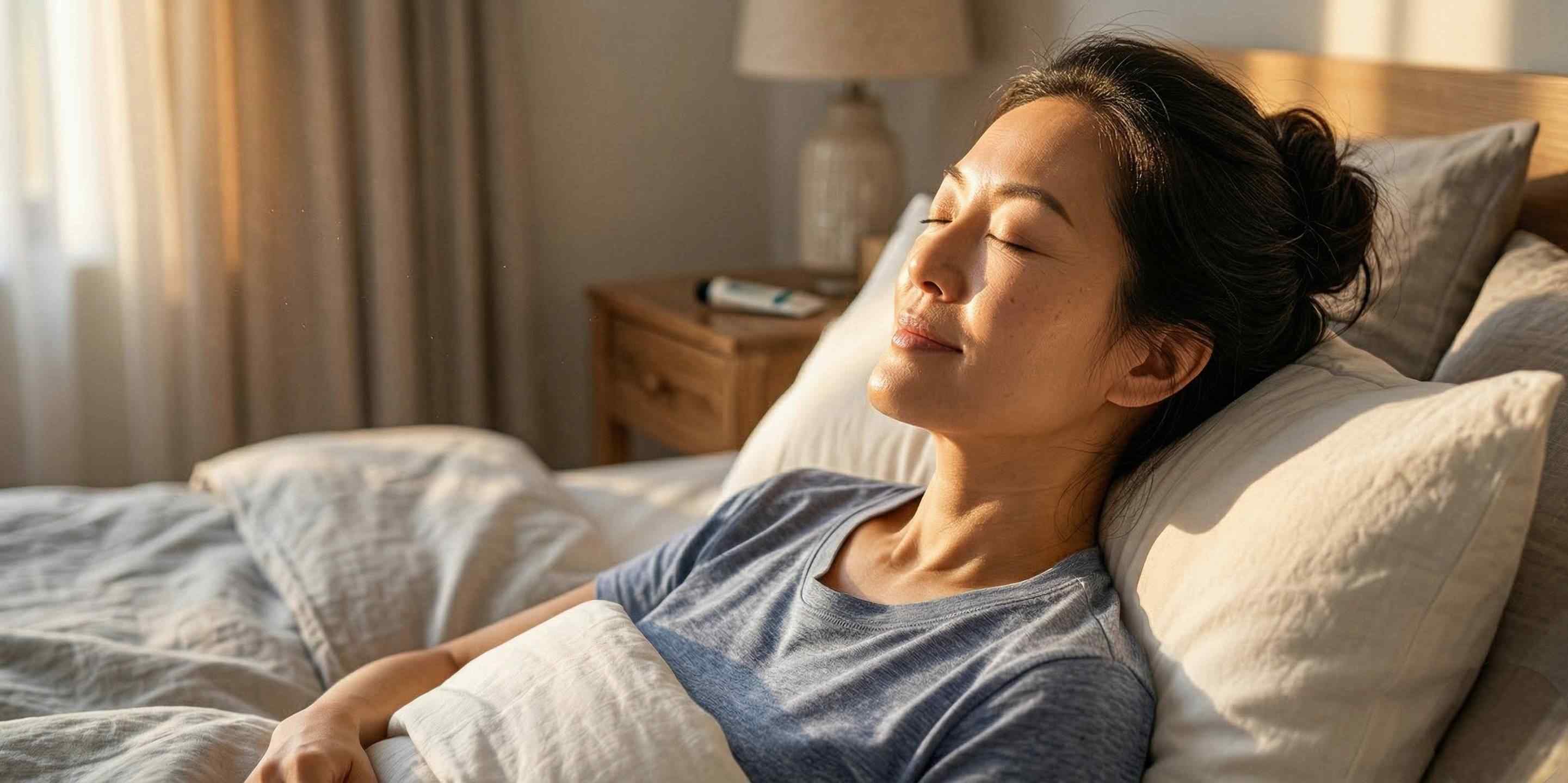
A study in the International Journal of Otolaryngology looked at people who switched from mouth to nasal breathing during sleep and reported more time in deeper sleep stages and fewer micro-arousals.[5] That citation is not a claim that mouth tape treats sleep apnea.
Anne Dutton, director of the Yale Stress Center education program, found that breathing through the nose triggers a calming effect on your nervous system.
After just a few moments of gentle nasal breathing you’ll feel more calm & relaxed, which means you’ll fall asleep quickly without tossing and turning.
The CPAP problem
CPAP machines remain the gold standard for moderate to severe sleep apnea. But compliance is a well-documented problem. Studies show 30–50% of users abandon their CPAP within the first year.[7] It’s uncomfortable, noisy, and creates dependency.
For the millions with mild to moderate sleep apnea, or those who can’t tolerate CPAP, nasal breathing interventions represent a real, evidence-based alternative. And the simplest way to enforce nasal breathing while you sleep? Keep your mouth closed.
Mouth taping is not a replacement for CPAP in moderate to severe sleep apnea. If you suspect sleep apnea, get diagnosed by a sleep specialist. Mouth taping may be appropriate as an adjunct therapy or for mild cases. Discuss with your doctor.
“I kept using my CPAP. Mouth tape is not a treatment for sleep apnea, and one person’s night is not a clinical result.”
A Piece of Tape. That’s It. (We Were Skeptical Too.)
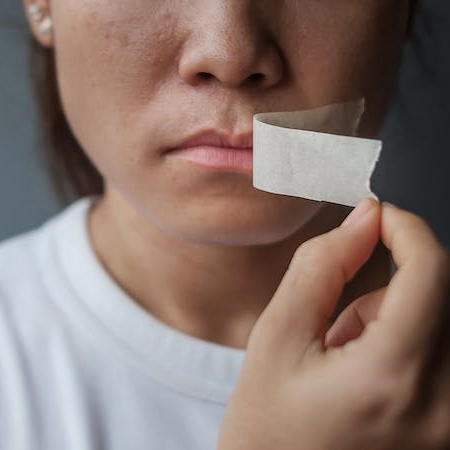
After all that science about airway collapse, jaw position, and nasal breathing — some people try a small strip of tape over the lips. It can hold the mouth closed while they sleep. Mouth tape is not a treatment for sleep apnea.
We know how it sounds. The biomechanics are straightforward. The studies do not establish mouth tape as a treatment:
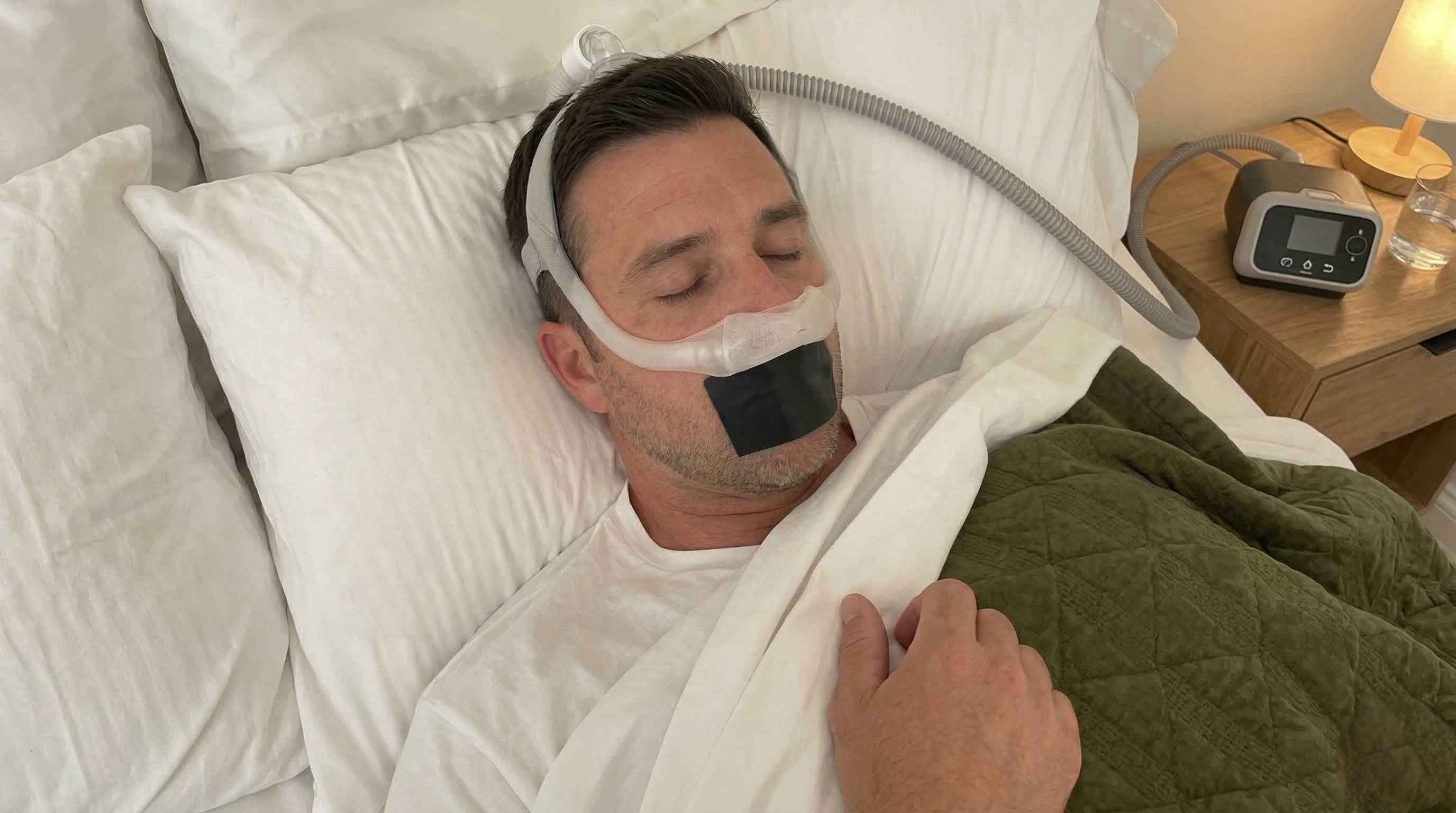
Mouth closed can keep the jaw from dropping as far. That is a position observation. It is not a treatment claim for sleep apnea, and it is not an oxygen-absorption result.
Some people describe less fragmented sleep. Most people take a few nights to get used to sleeping with tape on. We do not promise night-one results. Retail tape often costs less than $1 a night.
Mouth tape isn't a treatment for sleep apnea. If you snore heavily or gasp or choke in your sleep, get assessed first; don't tape with a blocked nose, and don't use on children without clinician guidance.
What research on mouth taping and mild obstructive sleep apnea measured — and what it did not establish.
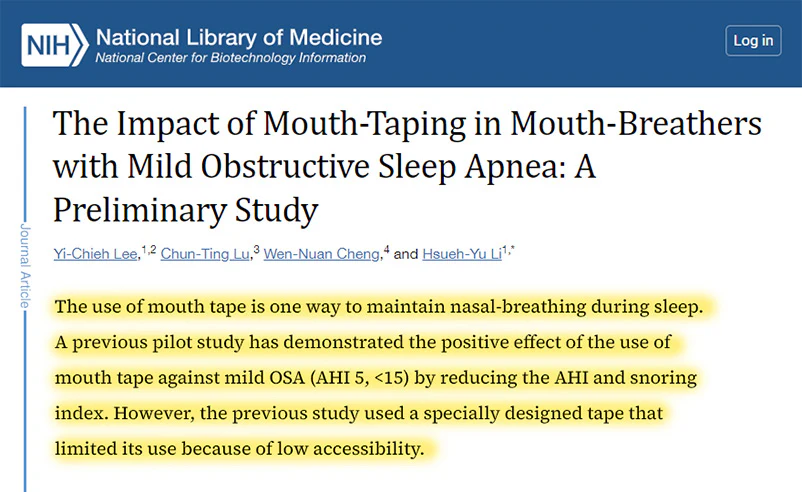
Sleep stages — some studies look at time in deeper sleep. That is not proof mouth tape treats sleep apnea.
Snoring — a cited study reported about a 50% reduction in its sample[8]. That finding has limits: it is not a treatment claim for sleep apnea, and it is not a promise for every person.
How people feel in the morning — reports vary. Customer stories are not a clinical measure.
Dry mouth — keeping the mouth closed can leave saliva in place. Comfort and hold vary by person.
46 brands researched and scored, 7 recommended. Here’s what we found.
We scored every tape on adhesive safety, comfort, breathability, and value.
300 Million TikTok Views Later, Everyone’s Talking About It
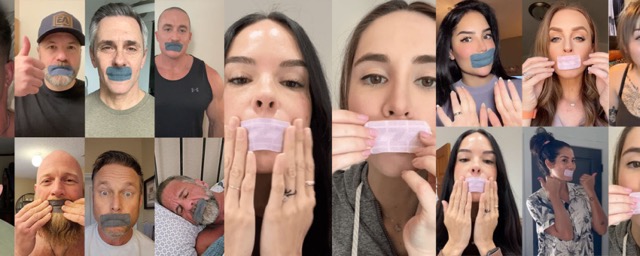
Mouth taping spread quickly on social video. Popularity is not evidence, and we do not promise night-one results.
The reason it spread so fast is simple: people try it, talk about the experience, and the videos travel. But popularity has created a new problem. We do not promise night-one results.
“When the nasal cavity gets congested, airflow decreases & bacteria flourish. These bacteria replicate and can lead to infections & colds and more congestion. Congestion begets congestion, which gives us no other option but to habitually breathe from the mouth.”

But popularity has a downside. Dozens of brands have flooded the market, and the quality varies wildly. Some tapes fall off by 2am. Others use adhesives with undisclosed chemicals. A few feel suffocating rather than breathable.
The concept is sound. The science backs it up. But not all tapes are created equal.
If you’re going to try mouth taping, here’s what to know.
Mouth tape sits on your face for 7 to 9 hours a night. The adhesive touches your skin longer than almost any other product you use. So the details matter.
- Adhesive lab-tested to ISO 10993 (brand-published; not an Evident lab test)
- Breathable, natural material (bamboo silk or similar)
- Full-coverage shape that seals properly
- Holds all night, removes cleanly without residue
- Brand discloses full ingredient list
- Undisclosed or synthetic adhesive ingredients
- Compounds flagged by EWG or ECHA for skin sensitization
- Small strips or X-shapes that don’t seal properly
- Tapes that leave residue or cause redness
- Non-breathable plastic or film materials
“I was diagnosed with mild sleep apnea two years ago. My doctor wanted me on a CPAP but I couldn’t tolerate it. I started mouth taping on a whim and my sleep study numbers improved within weeks. I wake up rested, my husband says I don’t snore anymore, and I finally feel like myself again.”
46 Brands Researched. 7 Recommended.
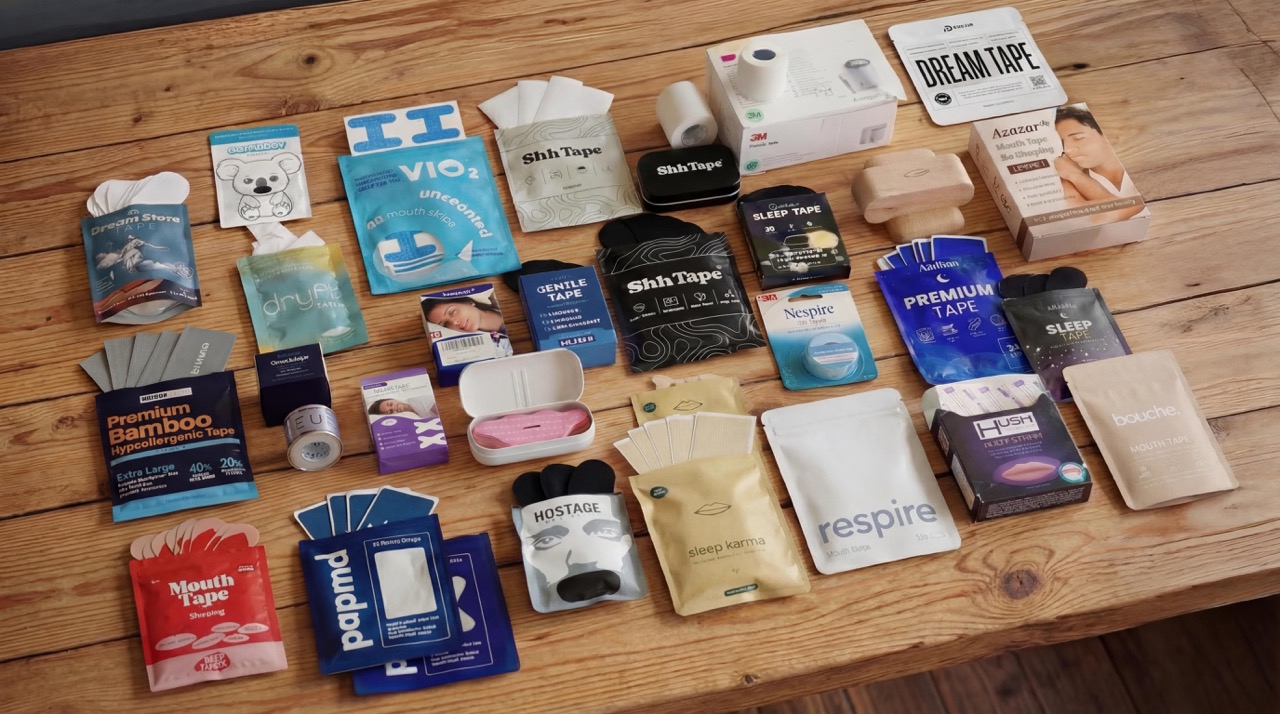
46 brands researched and scored, 7 recommended. Every brand was scored on five criteria: adhesive safety, hold strength, breathability, comfort, and value.
The results were eye-opening. Most brands had at least one serious issue — undisclosed adhesive chemicals, poor seal shapes that let air leak through, or adhesives that gave out by 2am. Only a handful passed all five tests.
Read the full review.
Adhesive safety. Hold strength. Breathability. Comfort. Value. See how every tape scored.
Frequently Asked Questions
Common signs include loud snoring, waking up gasping or choking, excessive daytime sleepiness, morning headaches, and dry mouth upon waking. The only way to confirm is through a sleep study (polysomnography), which your doctor can order. Home sleep tests are increasingly common and covered by most insurance.
No. Mouth tape is not a replacement for CPAP and is not a treatment for sleep apnea. For moderate to severe cases, CPAP remains the standard of care. If you use CPAP and have mouth leak, or if a clinician is evaluating mild sleep apnea, talk with your sleep doctor before taping.
No. Quality mouth tapes are porous. They encourage nasal breathing but don’t create an airtight seal. If your nose becomes blocked, you can easily breathe through the tape or push it off with your tongue. Your body’s survival instincts are far stronger than any adhesive. Researchers at Stanford confirmed that if oxygen levels drop, your body simply wakes you up.
Most people take a few nights to get used to sleeping with tape on. Start with a partial strip if it feels strange. Comfort and hold vary by person — we do not promise night-one results.
If you can breathe through your nose during the day without significant difficulty, mouth taping is generally safe. If you have severe nasal obstruction, address that with an ENT specialist first. Simple test: close your mouth and breathe through your nose for two minutes. If it’s comfortable, you’re likely a good candidate.
References
- American Academy of Sleep Medicine. "Rising prevalence of sleep apnea in U.S. threatens public health." AASM, 2014.
- Benjafield AV, et al. "Estimation of the global prevalence and burden of obstructive sleep apnoea." Lancet Respir Med. 2019;7(8):687-698.
- Marin JM, et al. "Long-term cardiovascular outcomes in men with obstructive sleep apnoea-hypopnoea." Lancet. 2005;365(9464):1046-1053.
- Lee SH, et al. "Mouth breathing, 'nasal disuse,' and pediatric sleep-disordered breathing." Laryngoscope. 2007.
- Trabalon M, Schaal B. "It takes a mouth to eat and a nose to breathe: abnormal oral respiration affects neonates' oral competence and systemic adaptation." Int J Otolaryngol. 2012.
- Weaver TE, Grunstein RR. "Adherence to continuous positive airway pressure therapy: the challenge to effective treatment." Proc Am Thorac Soc. 2008;5(2):173-178.
- Huang TW, et al. "Effect of oral appliance therapy on snoring and sleep quality." J Formos Med Assoc. 2019. See also: Lee YC, et al. "The effect of mouth-taping on snoring." J Clin Sleep Med. 2022.