
Are Caffeine Pouches Safe?
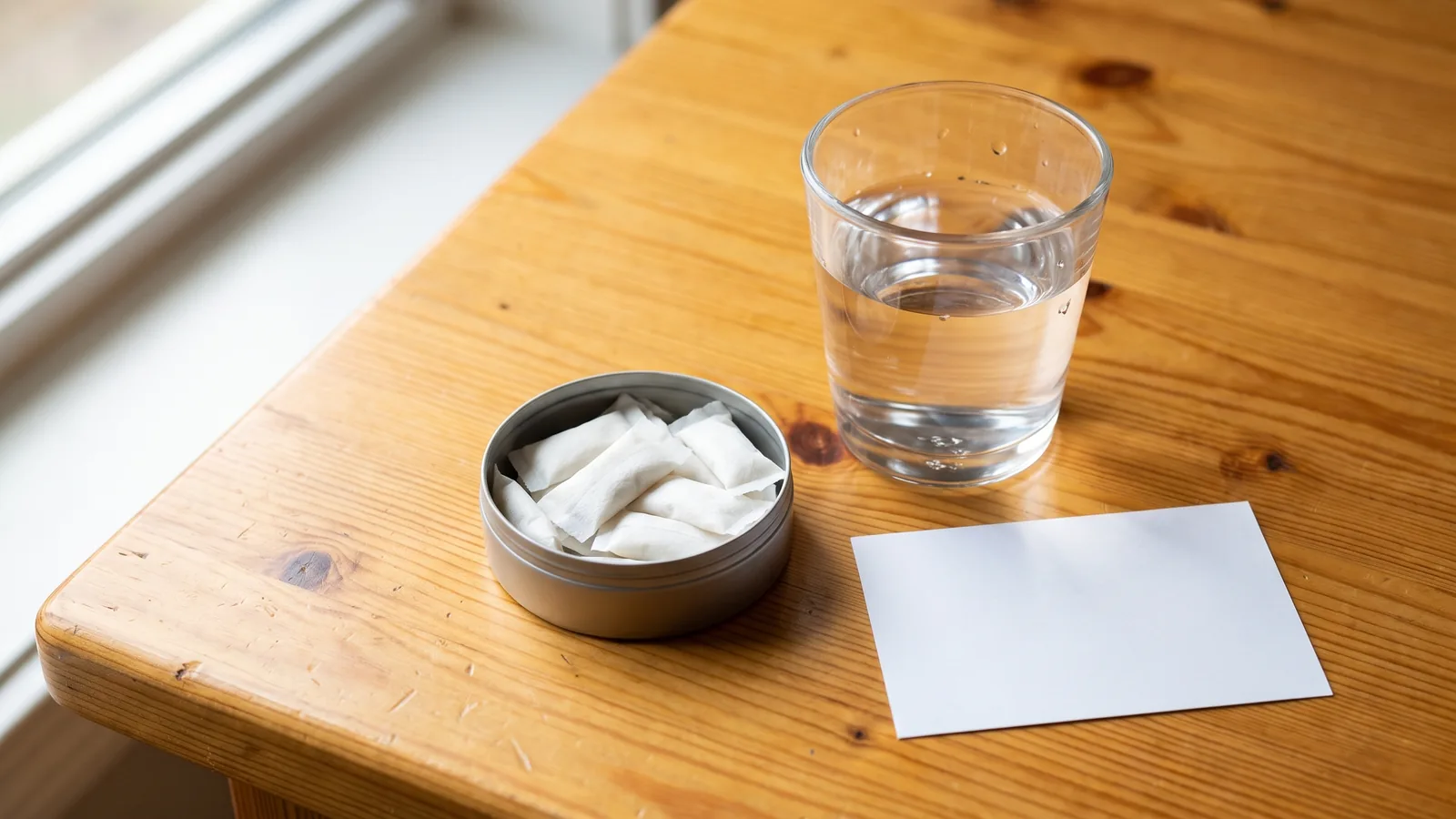
Short answer: for healthy adults, the main safety question is total caffeine. Pouches range from caffeine-free to 200 mg each, so one brand can be four times stronger than another. Long-term research on the pouch format itself doesn't exist yet, and no brand we reviewed publishes third-party contaminant testing.
How much caffeine is safe?
- Adults: the FDA cites up to 400 mg/day as not generally associated with negative effects. That's roughly two to three 12 oz cups of coffee. Sensitivity varies widely (FDA).
- Very high doses: the FDA estimates toxic effects like seizures can occur with rapid consumption of around 1,200 mg (FDA). FDA warnings about pure caffeine target bulk powders and liquids, not pouches (FDA).
| Pouch strength | Pouches to reach 400 mg |
|---|---|
| 50 mg | 8 |
| 100 mg | 4 |
| 180 mg | ~2 |
| 200 mg | 2 |
Remember to count coffee, tea, soda, and energy drinks too.
Teens
- Pediatric guidance cited by NBC News: adolescents should have no more than 100 mg/day, or none (NBC News).
- The FDA notes medical experts advise against energy drinks for children and teens (FDA).
- Schools and media have raised concerns about teen use of caffeine pouches (Telegram & Gazette; USA Today).
- There's no federal minimum age. Tobacco 21 doesn't apply because these products contain no tobacco or nicotine (Vaping360).
Proposed law: New York S9158
As of October 15, 2026, New York Senate bill S9158 is in the Senate Health Committee. It was introduced on February 9, 2026, a notice of committee consideration was requested on March 19, 2026, and it is not law. The introduced text would require food and dietary supplements with more than 100 mg of caffeine per serving to state that more than 100 mg per serving is not recommended for sale to persons under 18. Food and supplements with added caffeine, or with at least 150 mg of total caffeine per serving, would carry a high-caffeine designation and an advisory that the product is not recommended for children.
How caffeine pouches are regulated
The FDA regulates caffeine pouches as dietary supplements or conventional foods depending on their ingredients and marketing. There are no pouch-specific rules and no pre-market approval (NBC News). Per Vaping360, the FDA has added caffeine labeling to its 2026 guidance agenda (Vaping360). Contrast that with nicotine pouches: Zyn received FDA marketing authorization in January 2025 (USA Today).
Side effects users report
Aggregated Reddit reports describe burning or tingling, gum irritation or peeling, a bitter or chemical taste, and inconsistent or overly strong effects. These are user reports, not clinical evidence. General caffeine side effects listed by the FDA include fast heart rate, palpitations, insomnia, anxiety, jitters, upset stomach, nausea, and headache (FDA).
Gums and mouth
We found no long-term studies on oral health and caffeine pouches. If you notice irritation, rotate placement or stop.
What we don't know yet
FAQ
Can teens use caffeine pouches? Pediatric guidance says adolescents should stay at 100 mg/day or less, or have none. Many pouches exceed 100 mg each. Are caffeine pouches safer than nicotine pouches? They don't contain nicotine, which is addictive. They're also regulated differently and far less studied as a format. How many caffeine pouches a day is too many? It depends on the dose. Add up the milligrams and stay under 400 mg/day total from all sources (adults).
Become an Evident product tester
We're recruiting adults (18+) to try energy and focus products and report back: taste, feel, any irritation, and whether they actually helped. Testers get products free.