
Healthiest Energy Drinks (2026)
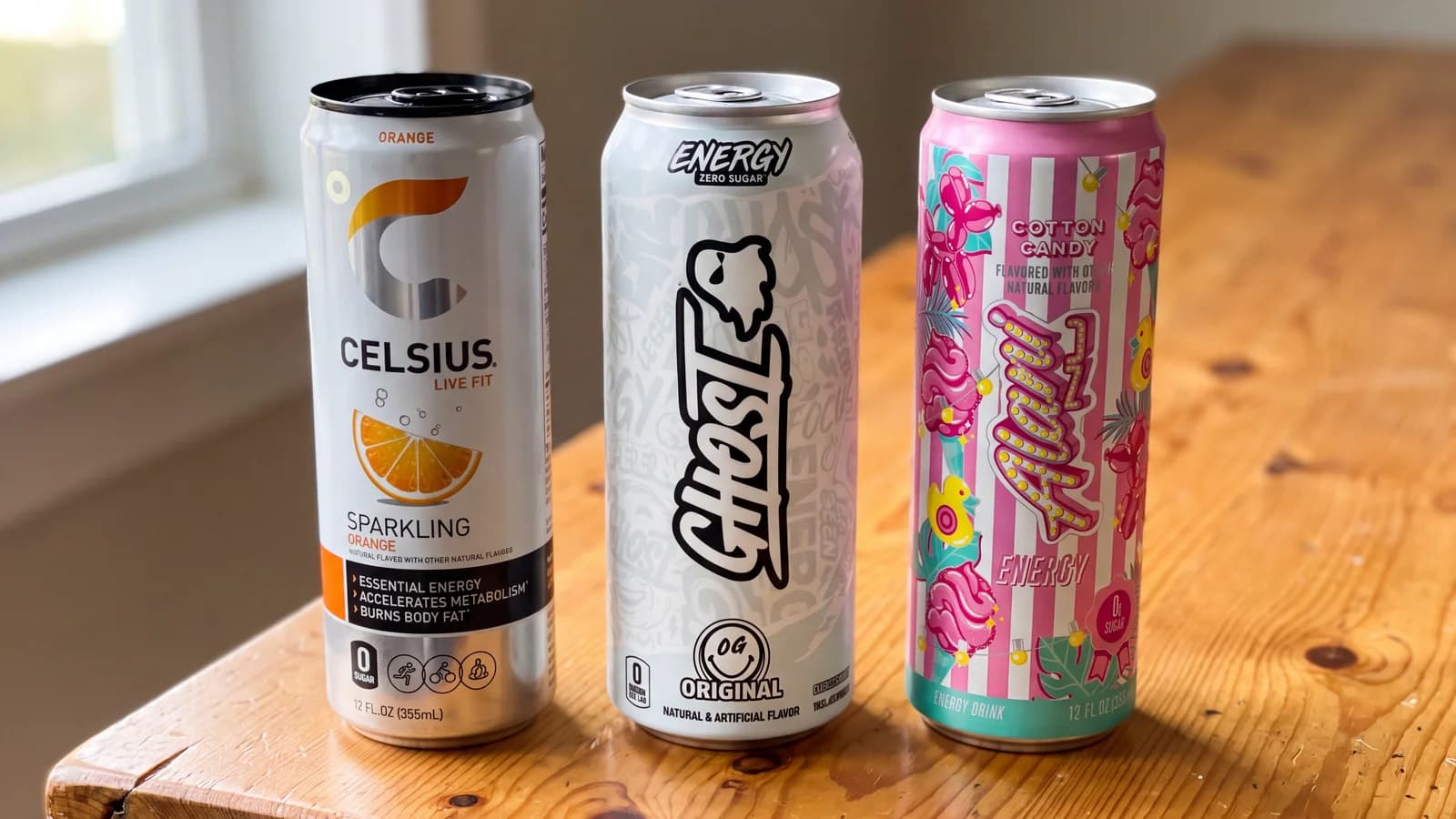
"Healthy energy drink" mostly comes down to three things: caffeine you can handle, little or no added sugar, and not stacking stimulants you didn't intend to. The FDA notes energy drinks generally contain 54–328 mg of caffeine per 16 oz, and there's no regulation specific to energy drinks (FDA).
Label comparison
| Drink | Caffeine | Per | Source |
|---|---|---|---|
| Red Bull (original) | 80 mg | 8.4 oz | Red Bull |
| Red Bull | 114 mg | 12 oz | Red Bull |
| Celsius / Celsius Vibe | 200 mg | can | Celsius |
| Celsius Essentials | 270 mg | can | Celsius |
| Ghost Energy (Zero Sugar) | 200 mg | 16 oz | Navy Exchange |
| Alani Nu (Sugar Free) | 200 mg | 12 oz | Alani Nu |
How to pick a healthier energy drink
- Choose the lowest caffeine that works. An 8.4 oz Red Bull (80 mg) is less than half of a 200 mg can.
- Zero or low sugar. Sugar-free versions avoid the added sugar of originals.
- Watch "hidden" caffeine from guarana, green tea extract, or yerba mate. Most U.S. energy drinks list total caffeine from all sources on the label (FDA).
- Not for kids or teens. Medical experts advise against energy drinks for children and teens (FDA).
- Limit to one a day if the can is 200 mg or more. Celsius itself recommends no more than two 12 oz cans per day (Celsius).
Our take (label-based)
For the lowest caffeine, a small Red Bull Sugarfree or 8.4 oz Red Bull (80 mg) is the easiest to fit into a day. The 200 mg sugar-free cans (Celsius, Ghost, Alani Nu) are similar in caffeine; pick based on ingredients and how you tolerate them. We'll add hands-on results after Evident testing.
Become an Evident product tester
We're recruiting adults (18+) to try energy and focus products and report back: taste, feel, any irritation, and whether they actually helped. Testers get products free.