
Best Sleep Trackers 2026
We tested 5 sleep trackers products and ranked them by formulation quality, testing transparency, trust, and value. Here's what won.
We buy every product ourselves. Hands-on multi-tester trials; lab checks when we commission them. Our methodology
Our review methodology
Every product on Evident Reviews is scored on the same published five-criteria framework. We buy products at retail when we test them — no free samples, no pay-for-placement. Ownership is disclosed whenever we review a brand we own.
Material Safety
25%What is actually in the product — ingredients, published testing, contaminants, and label accuracy. Weighted heaviest because these products go on or in your body.
Trust & Reputation
20%Lab results, review patterns, BBB record, and regulatory history. We score what a brand can prove, not what it claims.
Value & Policy
15%Cost per use vs. quality, return terms, and subscription practices. Premium pricing is not penalized when the formulation and testing justify it.
Features
15%Category-specific features: dose form, device specs, or mouth-tape fit, vents, and origin. Same weight everywhere.
Firsthand Testing
25%Hands-on notes when we have them. A missing firsthand score is shown as not tested.
Read the full methodology — scoring weights, testing steps, and how we handle products from brands we own.
The winner: Whoop
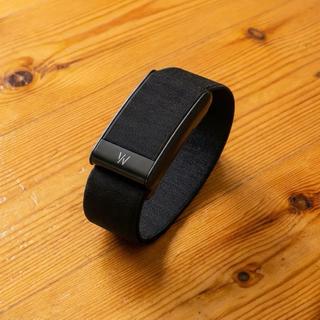
Whoop 4.0
The most sophisticated recovery and sleep coaching system on the market, built for athletes and high performers who want daily guidance, not just data. Multiple peer-reviewed validation studies (Miller 2020, Schyvens 2024) show strong agreement with PSG for total sleep time. The screenless design gives 5-day battery life and no blue light or notifications in bed. The catch: hardware is 'free' with membership, but you're locked into a $199-$359/year subscription and there's no screen — it's phone-dependent. Best for people who will actually act on the data.
All 5 products compared


The top 5, ranked

Whoop
Whoop 4.0
The most sophisticated recovery and sleep coaching system on the market, built for athletes and high performers who want daily guidance, not just data. Multiple peer-reviewed validation studies (Miller 2020, Schyvens 2024) show strong agreement with PSG for total sleep time. The screenless design gives 5-day battery life and no blue light or notifications in bed. The catch: hardware is 'free' with membership, but you're locked into a $199-$359/year subscription and there's no screen — it's phone-dependent. Best for people who will actually act on the data.
- Formulation
- 4/5
- Testing
- 4.5/5
- Value
- 3.5/5

Oura
Oura Ring 4
The most accurate consumer sleep tracker in independent testing — especially with the 2024 OSSA 2.0 algorithm update. The 96-participant Cambiaghi study (421,045 epochs, multi-night PSG) showed Oura Gen 3 with OSSA 2.0 hitting 75-91% accuracy across sleep stages — the best published consumer result. The ring form factor is genuinely better for sleep than any wristband, and 7-day battery eliminates charging friction. The downsides: $559 over 3 years with subscription, and the September 2025 Palantir/Defense Department partnership has raised legitimate privacy questions despite Oura's denials of data sharing.
- Formulation
- 3.5/5
- Testing
- 4.5/5
- Value
- 3.5/5

Apple
Apple Watch Series 10
If you already want a smartwatch and sleep tracking is secondary, this is the obvious pick. The Series 10's FDA-cleared sleep apnea notification feature is unique among wearables and genuinely clinically useful. Apple's on-device processing and privacy posture is the strongest in the category — health data is encrypted and not used for advertising. No subscription required for sleep features. The catch: only ~18 hours of battery means you'll need to charge it during the day or before bed, and sleep stage accuracy is middling (Schyvens 2024 showed MAE of 26 minutes and MAPE of 52.58% for REM detection).
- Formulation
- 4.5/5
- Testing
- 4/5
- Value
- 4/5

Garmin
Garmin Venu 3
The best 'pay once, own it' option in the category. Full-featured smartwatch with 14-day battery, sleep coach, automatic nap detection (>15 min, unique to Garmin), HRV, Body Battery, and zero subscription costs. Independent sleep-stage validation is thinner than Oura or Whoop, but the feature-to-price ratio over 3 years is the best in the category.
- Formulation
- 4.5/5
- Testing
- 3.5/5
- Value
- 4/5

Fitbit (Google)
Fitbit Charge 6
The cheapest credible option and the widest-studied wearable in sleep research. Core sleep tracking is free and solid — multiple PSG validation studies over 10+ years. Lightweight band form factor that most people forget they're wearing. The catches: Google ownership (2021) raises legitimate data concerns despite Fitbit's separate privacy commitments, and the best sleep features (Sleep Profile, Daily Readiness) are paywalled behind Fitbit Premium at $120/year.
- Formulation
- 3/5
- Testing
- 4/5
- Value
- 4/5
Keep exploring
Get our latest research
New reviews and sleep science insights — no spam, ever.