
Mushroom Coffee Benefits: What the Evidence Shows
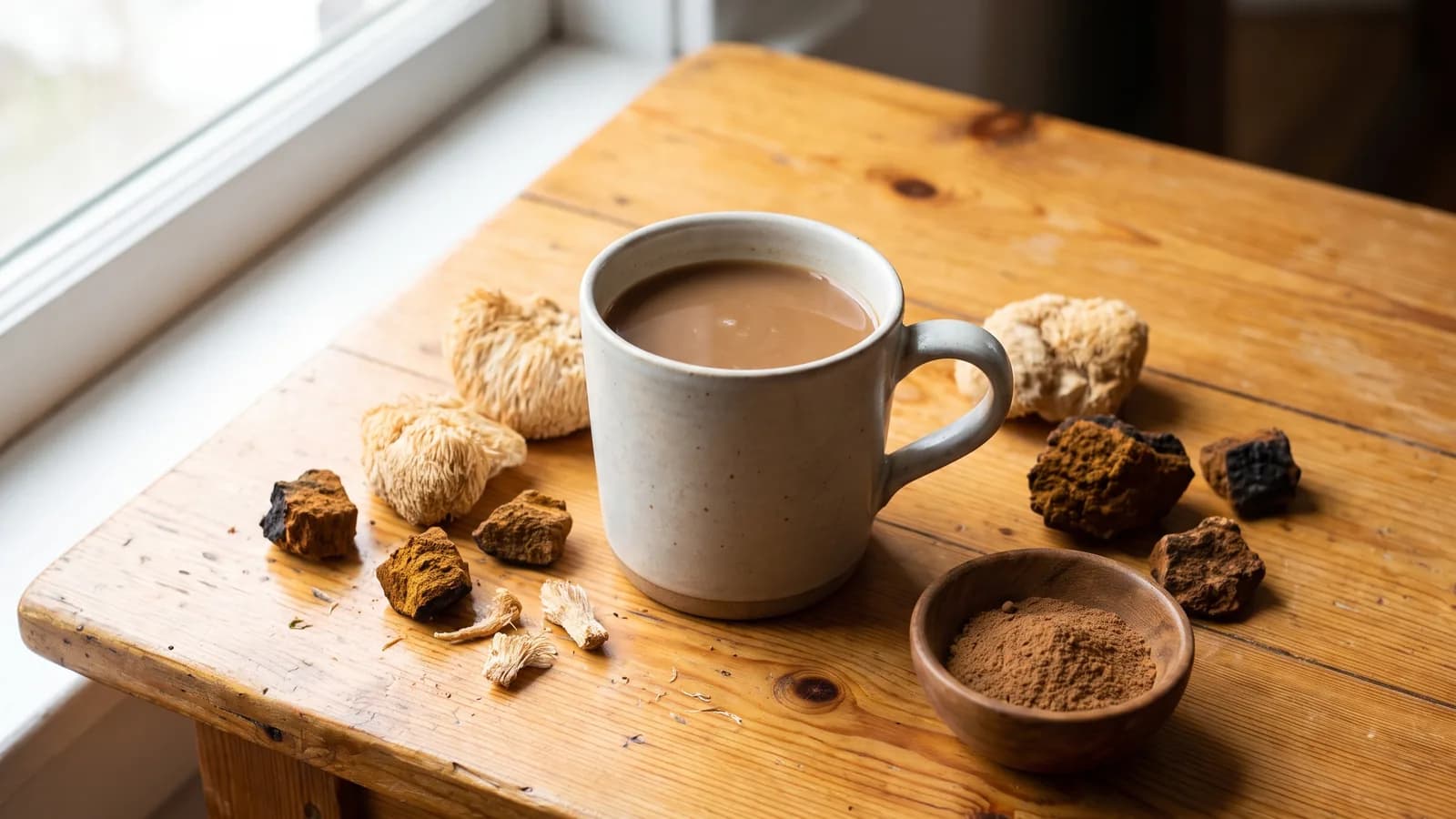
Mushroom coffee blends coffee (or a coffee substitute) with powdered functional mushrooms like lion's mane, chaga, reishi, or cordyceps. The benefits on the label usually come from studies of those mushrooms on their own, typically at much higher doses than a serving of mushroom coffee provides.
The dose problem
Our Ryze review found its 2,000 mg six-mushroom blend works out to about 333 mg per mushroom if split evenly, while clinical studies of those mushrooms commonly use 1,000 mg/day or more. That's about one-third of the minimum or less. Many brands don't disclose per-mushroom amounts at all. See: The Underdosing Problem →
Real benefits you can count on
- Less caffeine than regular coffee in many blends. Ryze lists 48 mg per serving vs about 96 mg for an 8 oz cup of brewed coffee (our Ryze review). See Does Mushroom Coffee Have Caffeine?
- Taste and routine many people enjoy.
Mushroom-specific evidence (examples)
- Lion's mane: a small double-blind trial in 30 adults (ages 50–80) with mild cognitive impairment found improved cognitive scores at 8, 12, and 16 weeks. The benefit faded after stopping (Mori et al., 2009). That's one small study in a specific population. More →
Bottom line
Choose mushroom coffee for taste and lower caffeine. Don't expect clinical effects unless the label discloses doses that match research. Our Best Mushroom Coffee ranks brands on dose transparency, testing, and value.