
Liquid IV Review: Real Science, Mostly Sugar
Liquid IV uses real sodium-glucose cotransport science — but the product is 69% sugar by weight, contains natural flavors, and has no third-party testing. The category leader isn't the category's best. Score: 4.7/10.

Liquid I.V. Hydration Multiplier - Lemon Lime. Our #34 rated electrolytes.
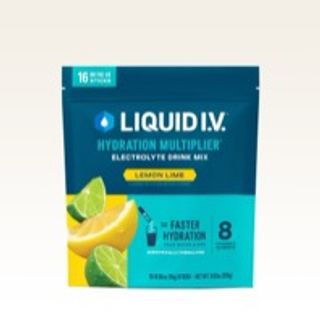
Liquid I.V. Hydration Multiplier - Lemon Lime
Evident Ratings
Liquid I.V. Hydration Multiplier - Lemon Lime
Sub-scores are category scores on a 1–5 scale, shown out of 10.
By Evident Health Research Team | April 2026
Quick Summary
Evident Score: 4.7/10** | **Price: $1.56/serving** | **Format: Powder stick packs
What it is: Liquid I.V. Hydration Multiplier is a powder electrolyte mix that uses sugar-dependent Cellular Transport Technology (CTT) to enhance water absorption. It is the best-selling electrolyte product in the United States and has been owned by Unilever since 2020.
Pros:
- Strong sodium (500mg) and potassium (370mg) per serving
- The underlying science -- sodium-glucose cotransport -- is clinically validated
- Available everywhere: Costco, Target, Walmart, Amazon, convenience stores
- 110,000+ Amazon reviews at 4.7 stars
- B-vitamin complex adds functional value
Cons:
- 11 grams of sugar per serving -- the product is 69% sugar by weight
- No magnesium, no calcium -- only two of four major electrolytes
- Contains "natural flavors" (undisclosed composition)
- Contains silicon dioxide (anti-caking filler)
- No third-party testing certifications (not NSF, not Informed Sport)
- More sugar than WHO oral rehydration guidelines recommend
Verdict: Liquid I.V. uses real science to sell a product that is mostly sugar. The Cellular Transport Technology is not marketing fiction -- sodium-glucose cotransport is a proven hydration mechanism used in hospitals worldwide. But Liquid I.V. uses significantly more sugar than the clinical standard calls for, skips two of the four major electrolytes, and has no independent testing to verify what is actually in the packet. For the category leader with Unilever resources behind it, that is a choice, not a limitation.
What Is Liquid IV?
Liquid I.V. was founded in 2012 by Brandin Cohen with the premise of bringing oral rehydration science -- the same principles used by the World Health Organization to treat dehydration in developing countries -- to the mainstream American consumer. Add one stick pack to 16 ounces of water and hydrate faster than water alone.
The company grew rapidly through DTC sales, influencer partnerships, and a strong Costco presence. In October 2020, Unilever acquired Liquid I.V. for a reported $500 million and invested $80 million in a dedicated manufacturing facility in Jefferson City, Missouri. Post-acquisition, the brand expanded into sugar-free formulations, energy blends, immunity products, and sleep mixes. It is now available in virtually every major US retailer and has become the default recommendation for first-time electrolyte buyers.
That market dominance is precisely why this review matters. Most consumers trust that the best-selling product in a category is the best product in the category. In the case of Liquid I.V., that assumption does not hold up under examination.
Ingredients and Formulation
Here is the full ingredient list for Liquid I.V. Hydration Multiplier (Lemon Lime):
> Pure Cane Sugar, Dextrose, Citric Acid, Salt, Potassium Citrate, Sodium Citrate, Natural Flavors, Dipotassium Phosphate, Silicon Dioxide, Rebaudioside-A (Stevia Leaf Extract), Ascorbic Acid (Vitamin C), Niacinamide (Vitamin B3), D-Calcium Pantothenate (Vitamin B5), Pyridoxine Hydrochloride (Vitamin B6), Cyanocobalamin (Vitamin B12)
The first two ingredients are sugars. Pure cane sugar and dextrose together account for 11 grams of the 15-gram stick pack. Everything else -- the electrolytes, the vitamins, the flavoring, the filler -- fits into the remaining 4 grams.
What CTT Actually Is
Cellular Transport Technology is Liquid I.V.'s branded name for a well-established physiological mechanism: sodium-glucose cotransport. In the small intestine, a protein called SGLT1 moves sodium and glucose into the bloodstream together. When both are present in the right ratio, water follows through osmosis more efficiently than it does from plain water.
This is real science. The WHO has used oral rehydration solutions based on this mechanism since the 1970s to treat cholera and acute diarrheal diseases. The sodium-glucose cotransport pathway is not in dispute. The question is how much sugar is necessary to activate it -- and whether Liquid I.V. uses more than needed.
The Electrolyte Profile
Liquid I.V. delivers 500mg sodium and 370mg potassium per serving -- both respectable amounts. Potassium comes from potassium citrate and dipotassium phosphate, both well-absorbed forms.
What is missing: magnesium and calcium. The original formula contains zero milligrams of either. For a product marketed as a hydration multiplier -- implying comprehensive hydration support -- the absence of two of the four major electrolytes is a significant gap. Magnesium alone is involved in over 300 enzymatic processes. Its omission is not a minor footnote.
The B-Vitamin Add-Ons
Each serving includes Vitamin C (73mg), B3, B5, B6, and B12 at 80-280% of daily value. B vitamins support energy metabolism, and their inclusion is not harmful. But they do not meaningfully enhance hydration. Their primary function here is label appeal: they make the nutrition facts panel look more impressive than "sugar, salt, and potassium" alone.
The Sugar Problem: 69% Sugar By Weight
This is the central issue with Liquid I.V., and it deserves a clear-eyed look at the numbers.
Each stick pack weighs approximately 15-16 grams. Of that, 11 grams are sugar (pure cane sugar plus dextrose). That means the product is roughly 69% sugar by weight. For every gram of electrolytes, vitamins, and other ingredients, you are consuming nearly 3 grams of sugar.
To put this in context: a standard sugar packet at a coffee shop contains 4 grams of sugar. Each Liquid I.V. stick pack contains the equivalent of nearly three sugar packets dissolved in water, plus some salt and potassium.
How Liquid IV Compares to WHO Standards
The World Health Organization's oral rehydration solution formula specifies 13.5 grams of anhydrous glucose per liter of water. Liquid I.V. directs you to mix one stick pack into 16 ounces (approximately 473ml) of water. Scaling that up to a full liter, you would be consuming approximately 23 grams of sugar -- roughly 70% more sugar than the WHO formula calls for.
This matters because the sodium-glucose cotransport mechanism has a saturation point. Adding sugar beyond what SGLT1 transporters can handle does not increase water absorption -- it just adds calories. The WHO spent decades optimizing the ratio for maximum hydration efficiency; Liquid I.V. chose a sweeter formulation that overshoots the clinical target.
Medical-grade ORS products like NormaLyte PURE and Trioral follow the WHO formula precisely, using 6-7 grams of dextrose per serving -- roughly half the sugar load of Liquid I.V. -- and achieve the same cotransport activation. The difference is that they taste medicinal, and Liquid I.V. tastes like a treat. That is an honest tradeoff, but it should be presented as one, not obscured behind the word "technology."
45 Calories Per Serving
At 45 calories per stick pack, a single Liquid I.V. will not cause metabolic harm on its own. But many users drink two or three daily -- the brand encourages this -- which adds 90 to 135 calories of pure sugar per day. Over a year of daily use, that is approximately 16,000 calories from sugar, from a product most people categorize as "water enhancer" rather than "sugary drink."
Liquid IV Sugar-Free: A Better Option?
In response to growing consumer awareness about sugar content, Liquid I.V. launched a sugar-free version that takes a fundamentally different approach to hydration science.
Evident Score: 5.0/10** | **Price: $1.50/serving
The sugar-free formula replaces the Cellular Transport Technology entirely. Without glucose, there is no sodium-glucose cotransport to leverage. Instead, it uses an Amino Acid Allulose Blend with L-Glutamine and L-Alanine, sweetened by allulose (a rare sugar that does not raise blood glucose) and stevia.
What Improved
The electrolyte profile is actually stronger: 490mg sodium, 380mg potassium, 56mg magnesium, and 120mg calcium. The sugar-free version delivers all four major electrolytes, addressing the original's most glaring gap. At 10 calories per serving, it eliminates the sugar problem entirely. The stick pack is also smaller (6.5g versus 15g), which tells you how much of the original's bulk was just sugar.
What Did Not
The sugar-free version still contains "natural flavors" with no disclosure of what compounds are included. It still contains silicon dioxide as a filler. And it still has zero third-party testing certifications. These are formulation choices, not limitations of the sugar-free format -- competing products in this price range (BPN, Transparent Labs, Seeking Health) have obtained NSF or Informed Sport certification.
The sugar-free version also abandons the very science that was Liquid I.V.'s original differentiator. Without glucose-dependent cotransport, it is essentially a standard flavored electrolyte mix. It scores higher than the original (5.0 vs. 4.7) because removing 11 grams of sugar is a net improvement, but it still ranks 30th out of 57 products in our analysis.
Testing and Transparency
Liquid I.V. is not NSF Certified for Sport, not Informed Sport certified, does not hold ConsumerLab approval, and does not publish Certificates of Analysis. We found no evidence of independent heavy metals testing results being made publicly available.
This is not a startup operating on thin margins. Unilever is one of the largest consumer goods companies in the world, with revenues exceeding $60 billion annually. The cost of NSF or Informed Sport certification -- typically $10,000 to $30,000 per product annually -- is a rounding error on their marketing budget.
For context, smaller independent brands in the space have achieved what Liquid I.V. has not:
- **Transparent Labs Hydrate:** Informed Sport certified, publishes COAs
- **BPN Electrolytes:** NSF Certified for Sport
- **Seeking Health Optimal Electrolyte:** NSF Certified for Sport, ISO/IEC 17025 accredited lab testing
When brands with a fraction of Liquid I.V.'s resources can afford independent verification, the category leader's decision not to pursue it is informative.
Taste and Usability
Credit where it is due: Liquid I.V. tastes good. The Lemon Lime is well-balanced, mixes cleanly, and the brand offers over 15 flavors -- variety unmatched in the electrolyte category. The single-serving stick pack format is genuinely convenient, and the product is available at virtually every major US retailer. If you forgot to pack your electrolytes and need something from a gas station, Liquid I.V. is probably in stock. On taste and accessibility, no competitor comes close.
Value and Pricing
At $1.56 per serving (retail), Liquid I.V. sits at the mid-to-premium end of the electrolyte market. A subscription through the brand's website drops the price to approximately $1.13 per serving (25% discount). Costco multi-packs offer similar savings.
For what you are getting -- two electrolytes, 11 grams of sugar, B vitamins, natural flavors, and silicon dioxide -- this is not strong value relative to the competition. Here is how the math compares:
*NormaLyte uses dextrose as a functional ingredient for cotransport, not as a sweetener.
**Skratch Labs is designed as a combined fuel and hydration product for endurance athletes.
At comparable or lower prices, several products deliver all four major electrolytes, zero sugar, and third-party testing verification. The convenience and availability premium that Liquid I.V. commands is real, but informed buyers can do better.
How Liquid IV Compares
In our analysis of 57 electrolyte products, Liquid I.V. Hydration Multiplier ranks 34th out of 57 with an overall score of 4.7/10. The sugar-free version ranks 30th at 5.0/10. Both versions sit in the bottom half of the category.
The original scores poorly on Formulation Purity (2.5/5.0) due to the high sugar content, natural flavors, and silicon dioxide. Testing & Transparency is its weakest dimension at 1.0/5.0 -- a reflection of the complete absence of independent verification. The Electrolyte Profile score (3.25/5.0) is held back by the missing magnesium and calcium.
Products that rank near Liquid I.V. include DripDrop (4.8/10), Pedialyte (4.5/10), and Gatorlyte (4.3/10) -- all mainstream brands that share similar formulation shortcuts. The gap between Liquid I.V. and the category leaders is substantial: the top five products (Needed, LyteShow, NormaLyte PURE, Skratch Labs, and NOOMA) all score 7.9 or higher, and every one of them either avoids natural flavors entirely or uses only real, named ingredients.
For a detailed head-to-head with the electrolyte space's other household name, see our LMNT vs. Liquid IV comparison. For sugar-free alternatives specifically, 38 of the 57 products we evaluated contain less sugar than Liquid I.V., and 35 contain none at all.
The Bottom Line
Liquid I.V. is not a bad product in the way that some supplements are bad -- it is not contaminated, it is not hiding proprietary blends, and the core science behind sodium-glucose cotransport is legitimate. For acute dehydration situations (illness, hangovers, extreme heat), it will hydrate you faster than plain water. That claim is supported by the physiology.
But "better than water" is an extraordinarily low bar for a $1.56-per-serving product. Salt water is better than plain water for hydration. The question is whether Liquid I.V. represents good value, clean formulation, and transparent quality -- and on all three counts, it falls short of what the category's best products deliver.
The product is 69% sugar by weight, uses more sugar than WHO guidelines recommend, omits half the major electrolytes, contains undisclosed natural flavors, includes a filler ingredient, and has zero independent testing despite being backed by one of the world's largest consumer goods conglomerates. These are not edge cases or nitpicks. They are the formulation.
If you already drink Liquid I.V. and it works for you, the sugar-free version is an improvement worth considering. If you are evaluating the category for the first time, the data suggests looking beyond the best-seller shelf and toward products that earned their ingredients rather than their marketing budget.
Frequently Asked Questions
Is Liquid IV good for you?
Liquid I.V. will hydrate you more effectively than plain water, thanks to the sodium-glucose cotransport mechanism. However, at 11 grams of sugar per serving (69% sugar by weight), it carries a meaningful caloric cost for daily use. It also omits magnesium and calcium -- two electrolytes involved in hundreds of physiological processes. For occasional use during illness or heavy exercise, it serves its purpose. For daily hydration, cleaner alternatives exist with better electrolyte profiles and no sugar.
Is Liquid IV better than Gatorade?
Liquid I.V. delivers substantially more sodium (500mg vs. Gatorade's ~160mg) and potassium (370mg vs. ~45mg), making it significantly more effective for actual rehydration. However, both products rely on sugar as a primary ingredient and neither includes magnesium or calcium. Liquid I.V. is the better electrolyte product of the two, but neither represents the top of the category.
Does Liquid IV really work?
The underlying mechanism -- sodium-glucose cotransport -- is well-established science used in hospitals and WHO oral rehydration programs worldwide. In that sense, yes, it works: it enhances water absorption in the small intestine beyond what plain water achieves. The caveat is that Liquid I.V. uses approximately 70% more sugar than the WHO formula specifies, meaning some of that sugar is excess rather than functional.
Why does Liquid IV have so much sugar?
The sodium-glucose cotransport mechanism requires some glucose to function -- this is the basis of all oral rehydration solutions. However, the WHO formula specifies approximately 13.5 grams of glucose per liter. Liquid I.V. delivers approximately 23 grams per liter equivalent, significantly exceeding the clinical standard. The likely explanation is taste: a sweeter product sells better, especially at mainstream retail where Liquid I.V. competes against flavored waters and sports drinks rather than medical ORS products.
Is Liquid IV sugar-free actually sugar-free?
The sugar-free version contains zero grams of sugar per serving. It uses allulose -- a rare sugar that tastes sweet but is not metabolized like conventional sugar and does not meaningfully raise blood glucose -- along with stevia leaf extract. The tradeoff is that without glucose, the product cannot use the sodium-glucose cotransport mechanism that was Liquid I.V.'s original scientific basis. The sugar-free version is a standard electrolyte mix with a better mineral profile (it adds magnesium and calcium) but without the cotransport advantage. For more on how natural flavors factor into these formulations, see our ingredient deep dive.
Get our latest research
New reviews and sleep science insights — no spam, ever.
More on Electrolytes

Liquid I.V.
Liquid I.V. Hydration Multiplier - Lemon Lime
Researched and scored by Evident Reviews using our published criteria (owned brands disclosed)High confidence
Background
Founded in 2012 by Brandin Cohen. Acquired by Unilever in October 2020 for a reported ~$500M. Now manufactured at a dedicated $80M facility in Jefferson City, MO. Category leader in mainstream retail.
More electrolytes reviews
Read Full Review