
AG1 (Athletic Greens) Review 2026 — Why We Rank It #18 of 23
The most famous greens powder in the world ranked #18 out of 23 in our independent test. Prop 65 lead warning, proprietary blend, $3.30/serving, and $2.2M/month in podcast ad spend. Here's what we found.

AG1 (Athletic Greens) AG1. Our #18 rated greens powders.
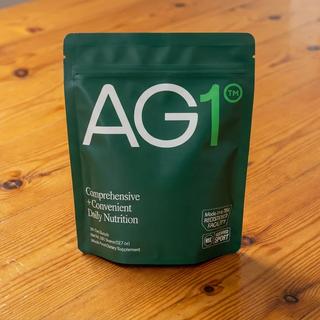
AG1 (Athletic Greens) AG1
AG1 is a case study in the gap between marketing and substance. It's the most famous greens powder in the world and ranked #18 out of 23 in our testing. The NSF Sport certification is real and commendable — everything else (proprietary blend, Prop 65 lead, DEHP finding, $3.30 price tag) suggests you're paying far more for far less quality than you could get from Green Vibrance, Garden of Life, or even Navitas. We don't recommend AG1.
Evident Ratings
AG1 (Athletic Greens) AG1
Sub-scores are category scores on a 1–5 scale, shown out of 10.
The Best-Marketed Greens Powder in the World. Also, One of the Worst.
AG1 (formerly Athletic Greens) is arguably the most famous greens powder on the planet. If you've listened to a podcast in the last five years, you've almost certainly heard an ad for it. Andrew Huberman drinks it. Joe Rogan promotes it. Tim Ferriss invested in it. And at $99 for a 30-day supply, it's also one of the most expensive.
We tested AG1 against 22 other greens powders. It scored 3.5 out of 10 and ranked #18 of 23. The brand that dominates the category by marketing spend comes third from the bottom on substance. Here's why.
The Marketing Math
Before we get into the product, it's worth understanding why AG1 is so expensive and so aggressively promoted. The brand reportedly spends approximately $2.2 million per month on podcast advertising alone. Published industry analyses estimate Joe Rogan is paid around $10 million per year to promote AG1, and Andrew Huberman around $2 million per year. Huberman has been listed as a paid Scientific Advisor to AG1 since March 2022 — not just an endorser but a compensated member of the brand's scientific team. Tim Ferriss is an investor.
AG1's affiliate program reportedly pays 20-50% commissions on every month a customer stays subscribed. That's why you see AG1 discount codes everywhere — every content creator with a podcast or YouTube channel is incentivized to push you to subscribe.
None of this is a secret, and none of it is illegal. But it helps explain why AG1 costs $3.30 per serving while similar-quality (or better) greens powders cost $1.00-$1.65. You're subsidizing the marketing budget.
The Proprietary Blend Problem
AG1 lists 75 ingredients on its label, which sounds impressive — until you realize the brand doesn't disclose how much of each ingredient is in the formula. Instead, ingredients are grouped into named blends (the "Alkaline, Nutrient-Dense Raw Superfood Complex," the "Nutrient Dense Extracts, Herbs & Antioxidants" blend, etc.) with a single total weight for each group.
Here's why that matters. Clinically-effective doses of common adaptogens — ashwagandha (300-600mg), rhodiola (200-400mg), eleuthero (300-1,200mg) — cannot simultaneously fit in AG1's 2,732mg plant extract complex alongside the other 10+ ingredients in that blend. The math forbids it. At least some, and likely most, of these ingredients are present at sub-clinical doses. You're paying for 75 ingredient names on a label without any guarantee that any individual ingredient is dosed at a level the research supports.
Contrast with Green Vibrance, which individually doses all 70+ of its ingredients on the label. Or Supergreen Tonik, which does the same and names Eurofins as its testing lab. The transparency exists in the category — AG1 just opts out.
The Lead Thing
AG1 carries a California Proposition 65 lead warning on its packaging. This is the result of a 2015 Prop 65 civil settlement in which AG1 agreed to pay $38,828 plus fees for failing to warn consumers about lead content. The brand also tests at, near, or above Prop 65 thresholds in some batches — ConsumerLab flagged measurable lead in AG1 in a 2022 report.
Separately, in 2023 ConsumerLab detected over 19,000 nanograms of DEHP plasticizer per serving in AG1. DEHP is a phthalate used to soften plastics and has been flagged by the FDA and EPA as a potential endocrine disruptor. It's not clear whether this is from the product itself or from migration out of packaging materials. AG1 has not publicly addressed the finding.
AG1 does hold an NSF Certified for Sport certification, which is genuinely the gold standard for supplement testing — NSF tests every batch for contaminants and banned substances. That's a real positive, and we weight it in our scoring. But NSF Sport certification doesn't eliminate the Prop 65 lead warning or the DEHP finding. Both can be true: AG1 has meaningful third-party testing AND has had contamination issues.
The Ingredient List, Honestly Assessed
AG1's formula is full of trendy and real ingredients. Spirulina, chlorella, ashwagandha, rhodiola, milk thistle, green tea extract — these are all legitimate research subjects. The problem isn't that the ingredients are fake or dangerous. The problem is that the doses are almost certainly too low to do much.
AG1 is also not USDA Organic. Several of its key ingredients are conventional, meaning they're grown with synthetic pesticides. That's a meaningful gap for a product positioned as a premium health supplement.
And it's got soy lecithin as one of the larger ingredients by volume — an ultra-processed emulsifier that many buyers specifically try to avoid. Why soy lecithin needs to be in a greens powder at all is unclear.
What AG1 Gets Right
To be fair, AG1 isn't all bad:
- NSF Certified for Sport — genuinely rare and genuinely meaningful for supplement testing
- Large, diverse ingredient list covers most essential micronutrient bases
- Taste is better than most greens powders (by most consumer accounts)
- Subscription experience is smooth and customer service is generally responsive
- The brand has been consistent and reliable for 15+ years
If you value the NSF Sport certification above all else and can afford $99/month, AG1 isn't going to hurt you. Our issue isn't that it's a dangerous product — it's that far better products exist for far less money.
Better Alternatives at Every Price Point
Here's what we'd recommend instead of AG1, depending on your budget:
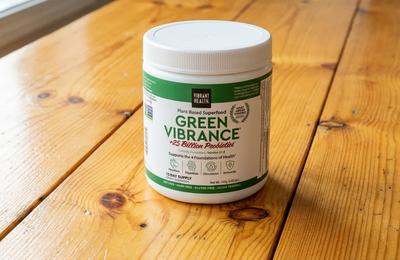
- Premium pick ($1.65/srv, half AG1's price): Green Vibrance by Vibrant Health — 70+ individually-dosed ingredients, triple-tested for heavy metals, 25 billion probiotics, #1 in our test.
- Alternative premium ($1.31/srv): Garden of Life Raw Organic Perfect Food — USDA Organic certified, Non-GMO Project Verified, strong essential micronutrient coverage. Our #2.
- Budget pick ($0.25/srv): Navitas Superfood + Greens Blend — 3 clean organic ingredients. Simple, cheap, honest. Our #6 overall and #1 budget.
- Maximum label transparency: Supergreen Tonik — individually dosed, Eurofins-tested, 40+ ingredients at clinically-meaningful amounts.
The Bottom Line
AG1 is a case study in the gap between marketing and substance. It's the most famous greens powder in the world, endorsed by some of the most influential voices in health media, priced as a premium product — and it's ranked #18 out of 23 in our independent testing. The NSF Sport certification is real and commendable. Almost everything else about AG1 — the proprietary blend, the lead history, the DEHP finding, the $3.30 price tag — suggests you're paying far more for far less quality than you could get elsewhere. We don't recommend it.
What We Found
What we liked
NSF Certified for Sport — genuinely rare and meaningful
Large, diverse ingredient list (75+ ingredients)
Better taste than most greens powders
Consistent brand with 15+ years of operation
Solid customer service and subscription experience
Our concerns
Proprietary blend hides individual ingredient amounts — likely sub-clinical dosing
California Prop 65 lead warning + 2015 Prop 65 settlement ($38,828)
ConsumerLab detected measurable lead (2022) and >19,000ng DEHP plasticizer per serving (2023)
Not USDA Organic — several key ingredients are conventional
Contains soy lecithin (ultra-processed emulsifier)
$3.30 per serving — nearly double our top-ranked alternatives
~$2.2M/month in podcast ad spend helps explain the premium pricing
Our Verdict
AG1 is a case study in the gap between marketing and substance. It's the most famous greens powder in the world and ranked #18 out of 23 in our testing. The NSF Sport certification is real and commendable — everything else (proprietary blend, Prop 65 lead, DEHP finding, $3.30 price tag) suggests you're paying far more for far less quality than you could get from Green Vibrance, Garden of Life, or even Navitas. We don't recommend AG1.
Get our latest research
New reviews and sleep science insights — no spam, ever.
More on Greens Powders

AG1 (Athletic Greens)
AG1 (Athletic Greens) AG1
Researched and scored by Evident Reviews using our published criteria (owned brands disclosed)High confidence
Background
Founded in 2010 in New Zealand by former police officer Chris Ashenden after his own nutrient-malabsorption struggles, AG1 bootstrapped to $160M in revenue before raising $115M in 2022 at a $1.2B valuation. It is now the highest-grossing greens powder brand in the world and the category's defining — and most polarizing — product.
More greens powders reviews
Read Full Review